
Politics · Essay · New this week
“Thucydides’ Trap”: Decontextualising History to Justify IR Theory in US–China Relations
The US–China debate rests on a selective reading of ancient Greek history. This essay unpicks the analogy at the heart of it.
Jacob Powell · Swansea University · 16 October 2026
Swansea University · 16 October 2026
Since the Mao-Nixon rapprochement in 1972, the relationship between the United States and the People’s Republic of China had been a symbol of Cold War stability. The premise of US-China relations enabled the PRC to concentrate on its “Peaceful Rise” (中国和平崛起). Following the collapse of the USSR, the US reassessed its relationship with the PRC and their role in the American hubris of Western capitalism and 21st-century globalisation. The established “balance of power” between the two countries started to shift in favour of China and later accentuated by the credit crunch and financial crisis of 2008. The juxtaposition of the PRC’s rise and the US’ financial calamity set the scene for a significant change in the relationship. This change presents a dilemma for International Relations theorists and historians on an adequate prediction of their future. In the case of this essay, realist American political science turns towards ancient Athenian historian Thucydides in setting out a myopic historical case study to clarify the theory of great power competition.
Thucydides’ Trap refers to the transition of power between an existing or declining hegemon and a rising power that aims to displace the hegemon. Popularised by Graham Allison, the term has been used extensively in traditional IR scholarship to understand the relationship between the US and the PRC. When rising and declining powers have conflicting interests, a rising power increases its material capabilities with the intention of renegotiating and revising the international order. For a declining hegemon, rather than allowing the renegotiation, the option of warfare becomes increasingly favourable against the rising power’s interests. Given the “rise of China” (中国崛起) narrative has illustrated equal capabilities with the US, realist IR scholarship uses Thucydides’ Trap as an objective lens in generalising great-power competition. Since the publication of Allison’s Destined For War in 2017, American political science has become infatuated with a particular framing of Chinese threat: that the PRC’s consolidation of economic power, coupled with its status as a one-party authoritarian regime, reinforces American perception as a different and potentially threatening rival. Allison cherry-picks sixteen case studies that narrow his conception of Thucydides’ Trap. Twelve of the case studies resulted in war. However, by unravelling his hypothesis further, Allison’s case studies are limited to the past five centuries, with the vast majority focussing on European powers and the wider Western world. His analysis observes the relationship between the cause and the outcome between two rival powers, but ignores the historical complexity and differing political and economic institutions of those periods. His framework selects similarities over differences by understating diplomacy, ideology, and historical agency—nullifying his “Trap” hypothesis. It is evident that Allison decontextualises periods of regional history to justify the argument between the US and the PRC as a repeat event from two and a half thousand years ago.
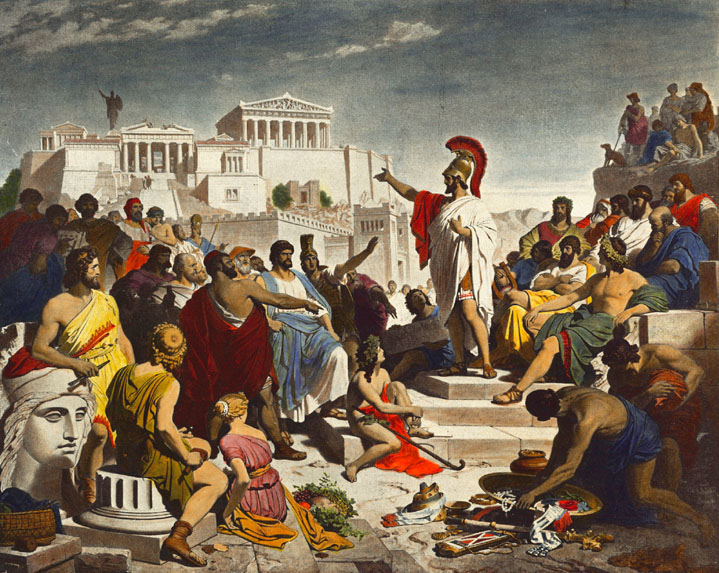
Before examining the arguments against Thucydides’ Trap, it is important to consider how American political scientists have interpreted Thucydides and the extent to which these interpretations have shaped US foreign policy. Contemporary realism is constructed on three pessimistic assumptions: the world is anarchic and contains a multitude of sovereign states who do not recognise international law; the absence of international law results in self-seeking behaviour driven by fear; and, under anarchy, war is always present. A major primary literature of realist IR scholarship concerns the events of Thucydides’ History of the Peloponnesian War, 431-404 BC. The war consisted of two confederacies of city-states for hegemony over Ancient Greece: the Delian League led by Athens and the Peloponnesian League led by Sparta. According to Thucydides’ first-hand account, the war consisted of prolonged fighting and intermittent conflicts among Greek city-states—culminating in the defeat of the Delian League following the involvement of the Achaemenid Empire. Athenian democracy was replaced with an oligarchic regime and Sparta emerged as the hegemon of Ancient Greece for three decades. For historians of antiquity, Thucydides mentions four causes of war: two were disputes between Athens and Corinth, a former ally of Sparta, over Corcyra and Potidaea; the third involved Athens’ exclusion of merchants from Megara, another ally of Sparta; the final cause, and Thucydides’ most important grievance out of which the war developed, was Sparta’s fear of growing Athenian “power”. In Eckstein’s study, most American political scientists who treat Thucydides as the formulation of IR power-transition theory depend upon English translations of his seminal work. Coupled with Thucydides’ underlying cause of the war, this presents a significant contradiction between ancient Greek and English interpretation in regards to Sparta’s decision to go to war as a response to the threat posed by Athens.
Unravelling a more accurate translation of Thucydides’ Peloponnesian War, the cognizance of IR becomes incredibly skewed. The narrative of “power-transition” between Athens and Sparta highlights how American realism decontextualises the wider historical relationship between the two city-states. For historians of antiquity, Thucydides’ perspective does not accuse the Athenians or the Spartans for the outbreak of the war. Although Athenian actions had threatened Sparta and provided a fearful decision of confrontation, Thucydides emphasises the cursory “disputes” between city-states as a major catalyst of the war. Athenian “power” did not emerge from nothing, yet IR scholarship sketchily ignores this point. The first three causes of the Peloponnesian War reveal the complexity of Greek inter-city-state politics. The war was shaped not only by the growth of Athens, but also by the transition between democratic and oligarchic rule, along with competing conceptions of honour, glory, justice, fear, kinship, and the internal interests of the opposing leagues. In the 5th and 4th centuries BC, the concept of hēgemonía was closely associated with honour. It was conferred informally upon Greek city-states for their achievements and was bestowed through consent rather than coercion. In the cases of Athens and Sparta, their contributions to the Achaemenid Empire enhanced their status within the ancient Greek world. Instead, American political scientists pick and choose variables from Thucydides to legitimise human psychology as the ultimate root of the war—and all justifications of war.
The history of IR theory reflects an ethnocentric perspective and Thucydides’ Trap is a representation of American perceptions of history aiming to predict US-China relations. In 2016, American political discourse became further bedevilled by US President Donald Trump’s xenophobic, nationalistic, and insular rhetoric; propagated by Trump’s fear-based, anti-globalist, anti-China narrative. In addition to Allison’s flawed methodology and selection bias in understanding the relationship between the PRC (Athens) and the US (Sparta), Thucydides’ Trap resides in American political science as a Eurocentric analytical tool in geopolitics. After unravelling IR theory’s decontextualization of Thucydides’ history, this essay will continue its argument that discredits Allison’s hypothesis. Historical analogies can be weak in contemporary politics, but one should not discourage readers from learning the past. However, there are serious caveats in providing historical case studies that do not resemble the realities of the contemporary world. The very basis of IR theory ignores this notion. Thucydides’ Trap categorises US-China relations as a collision of two great economic powers. By dismantling this idea, however, Thucydides’ Trap omits the conflict between cultures—a crucial element in US-China relations—and emphasises the depthless understandings of human psychology.
Both historians and political scientists have regarded Thucydides as a pinnacle of “scientific” historical analysis. Traditional IR scholarship and American political discourse set its framework on “scientific history”, which conflicts strongly with studies related to anthropology and culture. The two worldviews, rooted in Western and Oriental culture, that dominate US-China relations are Westphalia and Tiānxià (天下). The Peace of Westphalia, erroneously referred to as the Treaty of Westphalia, consisted of two treaties: Osnabrück, the settlement between the Holy Roman Empire and Sweden; and Münster, the settlement between Spain, the Dutch Republic, and France. The Peace marked a significant shift away from Europe’s medieval monarchical and imperial authority over territories and peoples, and paved the way for a system that enabled independent states to pursue their own interests. Tiānxià, on the other hand, emphasised a worldview based on hierarchy and harmony: a Confucian ruler wielded virtue, morality, and benevolence and not divine right. In contemporary language, the US is considered a sovereign nation-state that ensures the importance of democracy within other nation-states. By contrast, China is a civilisation-state that aims to project a peripheral state system of hierarchy, in which China is the mediator of democracy between nation-states. American IR theory invariably sees global history as Western imperial history. With the rise of the PRC, the US’ perception of history is challenged and its behaviour becomes increasingly more aggressive with the intention to isolate the PRC. President Trump is proof of this stance during his second Presidential term—imposing an accumulation of tariffs against the PRC at 145% (Ekelund et al., 2026, 130).
It is evident that the PRC derives from an entirely different cultural and historical legacy compared to the US. From unravelling Thucydides’ Trap, there were affinities and commonalities between Athenian and Spartan culture. Both cultures spoke variants of Ancient Greek, both shared oral poetry, both shared various Greek gods, and both considered themselves part of the Hellenic world. One could even consider similar affinities between the New England colonies and the British Empire as rivals and successors of global hegemony. Upon the legacies of the Cold War, global orders have become historical anomalies in measuring the extent of power in the international system. Insofar as the effects of globalisation, this century is shaped by a triangular power structure: the “West,” the “Far East,” and the “Global South.” This not only highlights new conflicts between cultures and worldviews, but also by the emergence of a multipolar international system in comparison to bipolar and unipolar systems of the past. In the case of the US and the PRC, IR theory fixates on the anarchic Westphalian international system. However, the concepts of sovereignty and nation-states do not coincide with the Tiānxià framework any less than the concepts of hierarchy and harmony are with Westphalian Peace. With the continuing decline of the US, exacerbated by Trump’s insular foreign policy, American political science emphasises fear of war as its ultimate conclusion while the PRC builds its trade networks and connectivity with other states with the intention of peaceful international relations.
Thucydides’ Trap seems to only have a specified conflict between great powers, and, in doing so, abrogates the significance of this century’s globalisation. Since the 20th century, a cluster of countries have emerged and reached similar modes of American and European industrialisation standards. Multipolarity has coalesced into a plethora of regional associations that have challenged the US and Western international institutions—such as the South Common Market (Mercosur) in Latin America, the Southern African Development Community, ASEAN, the GCC in the Middle East, and even the EU. Martin Jacques’ When China Rules the World emphasises this as a world of “contested modernity” in which nation-states in the international system embrace the extension of a capitalist future rather than a present dominated by tradition. The most prominent examples include the Asian Tigers (Hong Kong, South Korea, Singapore, and Taiwan) and the establishment of BRICS. Although multipolarity and globalisation appear as a latticework of competing economies and interests, the US’ decline is also a ripple effect of global fragmentation supported by regionalisation and shared cultural values. The aforementioned organisations are bound by duty or kinship to support their neighbours while increasing their own material capabilities. Since the aftermath of the COVID-19 Pandemic, President Trump’s rhetoric of national security and prosperity resulted in the US’ withdrawn approach to international institutions. The US’ disengagement with these institutions, which are so reliant on the US, only further plays into the PRC’s alternative proposition of the international system: a systemic framework of physical trade and connectivity supported by the ideas of Tiānxià. Therefore, Thucydides’ Trap not only decontextualises its own history, but also decontextualises the reality of its own contemporary international system. Allison’s hypothesis on US-China relations only narrates American political science’s fascination of European and Western-centric history while bracketing “otherness” of non-Western regions.
Moreover, Thucydides’ Trap still encapsulates the US and the PRC as a conflict in ideological terms between capitalism and socialism. Compared to the Cold War, the US and the USSR engaged in “hot,” proxy wars to establish either neoliberal capitalist or Leninist-Marxist socialist forms of government. Similar to that of Athenian democracy and Spartan mixed oligarchy. In the 21st century, globalisation and the “rise of China” narrative have altered this notion. In a multipolar contestation of capitalist modernity, the conflict between cultures has become an increasingly prevalent ideology to achieving harmony. Since post-Mao and Deng Xiaoping’s “Reform and Opening-Up” (改革开放), the PRC has constructed a concoction of command and market economies that fits the standards of the current international system. The PRC would prosper from foreign trade without needing to rely on it; by contrast, the US’ consumption-led economy relies on the status of the US dollar as a reserve currency. Both formats of these economies are highly influential in the processes of globalisation. The polycentric global economy, shared between the continents of Asia, Europe, the Americas, and Africa, has become accustomed to ensuring acceptance in the international community. This makes the PRC’s role as the Tiānxià-mediator of nation-state harmony easier when confrontation is associated with trade instead of war.
As a result of the conflict between cultures, Thucydides’ Trap also bifurcates the narrative associated with global politics and US-China relations. From the perspective of the US, the discussion is narrowed to its interactions with the PRC. Firstly, the trajectory of the relationship, underscored by COVID-19, has mobilised companies to adjust supply-chain reliance and entice a “trade war.” In 2022, bilateral trade in goods grossed US$690 billion before their relationship “decoupled” (Zhengyuan, 2024, 66). The US share of the PRC’s total exports fell from 19.3% in 2018 to 15% by 2023 (Zhengyuan, 2024, 78-79). Over the course of the 2020s, there has been significant trade deficit, lack of market access for US corporations, and a currency battle between the US dollar and the rénmínbì (人民币). A crucial industry to the current US-China Artificial Intelligence race—and an industry that has plagued the decisions of the South China Sea—is the semiconductor industry. Secondly, the US’ vilification of the PRC’s one-party authoritarian regime has prompted, hypocritically, sanctions on suspected human rights abuses in Hong Kong and Xinjiang. American political science seemingly justifies a conflict of trade by invoking international law. The Thucydides’ Trap hypothesis feeds into the great-power transition where the global economy is decided on the equilibrium of American and Chinese foreign policy.
From the Chinese perspective, however, the PRC is making use of this polycentric multipolarity by revitalising the connectivity of its past to shape the future. In 2013, President Xi Jinping launched the Belt-and-Road Initiative (BRI), originally known as “One Belt, One Road” (一带一路), to integrate Eurasia, Europe, Southeast Asia, Africa, the Persian Gulf, and the Indian Ocean. The initiative evolved from the ancient Silk Road that connected imperial China to the Mediterranean. The BRI consists of two major modes of connectivity: the term “Belt” is the control of land and the term “Road” is the control of the sea. For the past thirteen years, the PRC has constructed a network of railways, oil and gas pipelines, ports, and economic corridors throughout Eurasia—an estimated 4.4 billion people, spanning economies with a combined Gross Domestic Product (GDP) of US$21 trillion, could be impacted by this incredible project (Lin et al., 2019, 509). The complexity of the BRI, with its multitude of components, coincides with the PRC’s Tiānxià framework by promoting long-distance connectivity in a world that will become increasingly regionalised. Although the PRC’s one-party authoritarianism may conflict with democracy between nation-states, its economic power and membership in the Global South enables trade to be the ultimate factor for peace.
To conclude, the political environment is tainted with conflicting and poorly understood narratives. Thucydides’ Trap and American political science are adherent to the beliefs of Western history as global history within the Westphalian system. It is not to say that European history, particularly imperial history, has not been influential in the multipolar world; however, decontextualising fragments of complex history is not an answer. The “Trap” discusses so much on the possibility of warfare that it fails to distinguish the reality of the contemporary international system. Allison’s argument befits the circumstances dating back to ancient Greece, and how he justifies realist IR theory to filter, distort and simplify the complexity of our world. Although the relationship has altered since 1972, neither the PRC nor the US want a war and the conditions of warfare have changed so much that economic cooperation is its most preferred option. While history and theory provide insight into the factors of US-China relations, the variables point towards the conflict between cultures as a more promising tool of analysis in geopolitics. While the US seeks a justification for war with its economic rival, the PRC simply embraces the possibility that trade connectivity can sustain a harmonious peace among sovereign states.
Bibliography
Allison, Graham, Destined for War: Can America and China Escape Thucydides’s Trap? (New York: Houghton Mifflin Harcourt, 2017)
Eckstein, Arthur, ‘Thucydides, the Outbreak of the Peloponnesian War, and the Foundation of International Systems Theory’, International History Review, 25.4 (2003), 757–74
Ekelund, N. Hugo, Lina Fjellner, and Kjell Engelbrekt, ‘The Changing Character of U.S.–China Economic Relations: From Competition to Geopolitical Rivalry, 2018–23’, Asia Policy, 21.1 (2026), 127–53
Jacques, Martin, When China Rules the World: The End of the Western World and the Birth of a New Global Order, 2nd edn (London: Penguin, 2012)
Lebow, Richard Ned, and Robert Kelly, ‘Thucydides and Hegemony: Athens and the United States’, Review of International Studies, 27 (2001), 593–609
Lin, Shaun, James D. Sidaway, and Chih Yuan Woon, ‘Reordering China, Respacing the World: Belt and Road Initiative (一带一路) as an Emergent Geopolitical Culture’, The Professional Geographer, 71.3 (2019), 507–22
Mastro, Oriana Skylar, ‘In the Shadow of the Thucydides Trap: International Relations Theory and the Prospects for Peace in U.S.–China Relations’, Journal of Chinese Political Science, 24 (2019), 25–45
Palmer, James, ‘Oh God, Not the Peloponnesian War Again’, Foreign Policy, 28 July 2020, https://foreignpolicy.com/2020/07/28/oh-god-not-the-peloponnesian-war-again/ [accessed 8 October 2026]
Rhodes, P. J., ‘Thucydides on the Causes of the Peloponnesian War’, Hermes, 115 (1987), 154–65
Yoder, Brandon K., ‘Uncertainty, Shifting Power and Credible Signals in US–China Relations: Why the “Thucydides Trap” Is Real, but Limited’, Journal of Chinese Political Science, 24 (2019), 87–104
Zhengyuan, Bo, ‘COVID-19: Catalyzing US–China Supply Chain Realignment’, in COVID-19 and US–China Relations, ed. by Zheng Wang (Cham: Palgrave Macmillan, 2024), pp. 65–88

The author
Graduate in BA International Relations and History from Swansea University, including one year as an exchange student at City University of Hong Kong. Current editor and writer for Tally Politics with interests in Asian politics, China relations, and the Belt-and-Road Initiative (BRI).
All work by this author →Read next, in Politics
- Applying Xi Thought to Taiwan John J. Parman
- Nuisance Politics: How Pressure Groups Can Hinder Democratic Operations in the UK Alexandra Baily
- US Withdrawal from Afghanistan: Causes and Consequences Mark Cusack