

Politics · Essay · The Weekly, No. 6
Panic and Public Policy: The Social Construction of Social Media Addiction
Analysing a generation's greatest concern.
Brad Turland · Adelaide University · 7 September 2026
Adelaide University · 7 September 2026
Introduction
Social Media (SM) has been the cause of much concern and controversy in recent years, with parental concerns particularly evident regarding adolescent addiction to SM. As a result, to the social constructionist, SM addiction is a social problem. Society’s widespread concern, initially brought about by psychologists and researchers, and later disseminated more broadly, indicates its status as a social problem. This essay will discuss the construction of SM addiction as a social problem, noting the impact of academic research and the translation of this research to the popular level has had a major impact. The social constructionist framework is introduced, followed by a discussion of the historical construction of SM addiction as a social problem. Contestation of evidence and responses are discussed. Readers should note that whilst not the first SM platform, Facebook is used as a baseline due to its enormous impact on modern social media as it is currently understood, which is heavily influenced by and developed from much of Facebook’s model.
The Social Constructionist Framework
The social constructionist framework approaches social problems as dependent on the public view, defined by the level of public concern felt over them; in a simplified sense, a social problem to the constructionist is whatever society deems to be as such. Issues are often brought to attention or defined by claims makers, such as activists, and media and public discourse play a major role, through shaping and framing concern . This contrasts the objectivist approach, where a social problem is defined by the presence of an “objectively-given, concretely real, damaging or threatening condition”, without public attention required for recognition; under the social constructionist view, status as a social problem is not automatically granted if objective harm is present, but rather when society sees that intervention is required for a perceived harm (Goode & Ben-Yehuda, 2009, pp. 150–152).
Historical Construction of Social Media Addiction as a Social Problem
The initial introduction of SM as it is currently understood came with the focus on “faster connections to friends, even across oceans” (Kosola, 2026), with platforms such as Facebook first created as networking websites for college students. Facebook’s founder, Mark Zuckerberg, described it at the time as “an online directory that connects people through universities and colleges through their social networks there” (Huddleston, 2018), whereby “the nature of the site is that each user’s experience improves if they can get their friends to join it” (Tabak, 2004). With these early emphases on connection, and more broadly, the benefits of SM, construction of the socially problematic label placed on SM addiction was yet far off. Furthermore, beginning only as accessible to college students, for certain colleges as made available, SM forms like Facebook began with a powerful but niche audience. As technology has evolved, with “increasing engagement in the digital world”, SM has become an “increasingly popular activity”, with new generations growing up in fully digitised society (Shannon et al., 2022). As a result, the impacts of SM gradually became more apparent, with further research becoming prevalent; psychologists became (and continue to be) claims makers, with researchers suggesting links between SM use and “association with symptoms of depression, anxiety, and stress” (Shannon et al., 2022), and rising trends in mental health issues from the early 2010s forming the first major sources of concern (Twenge, 2020). These trends were particularly notable with sudden increases in mental health problems around 2012, which coincided with smartphone ownership exceeding 50%, as Twenge (2020) notes. However, construction of SM addiction as a social problem had not yet begun, with the “growing consensus” that Twenge (2020) notes – that is, that 2012 mental health declines were linked to SM use – not yet occurring till much later.
The construction of SM addiction as a social problem gradually solidified through the broader synthesis of aforementioned existing (and continued research into) findings regarding the impacts of SM, and dissemination of this information to broader audiences. Notably, reports from authoritative bodies provided guidance, suggesting to the public a consensus regarding the negativity of SM. Significant US Government reports which have been reviewed and expanded upon extensively (USDHHS, 2023), and reports from authoritative bodies such as the World Health Organisation (WHO, 2024) are examples of such. Alongside these major governing bodies, dissemination of concern regarding SM also grew through large scale, popular level literature, which translated academic research into an accessible form. Social psychologist Jonathan Haidt’s The Anxious Generation (and the rest of his follow-up public commentary), is a premier example of this, which specifically discusses the dangers of SM, and suggests significant reforms to its use among adolescents, and the use of smartphones as a whole (Haidt, 2024). Whilst many other works have been published and widely read on this topic, Haidt’s is particularly noteworthy for extraordinary impact, having spent an entire year on major bestseller lists (The New York Times, 2025), and having even been specifically widely disseminated by legislature (Sanders, 2024). Through these major authoritative sources – governing bodies, and academics such as Haidt – an apparent objective harm was translated into social concern, and its status as a social problem was constructed.
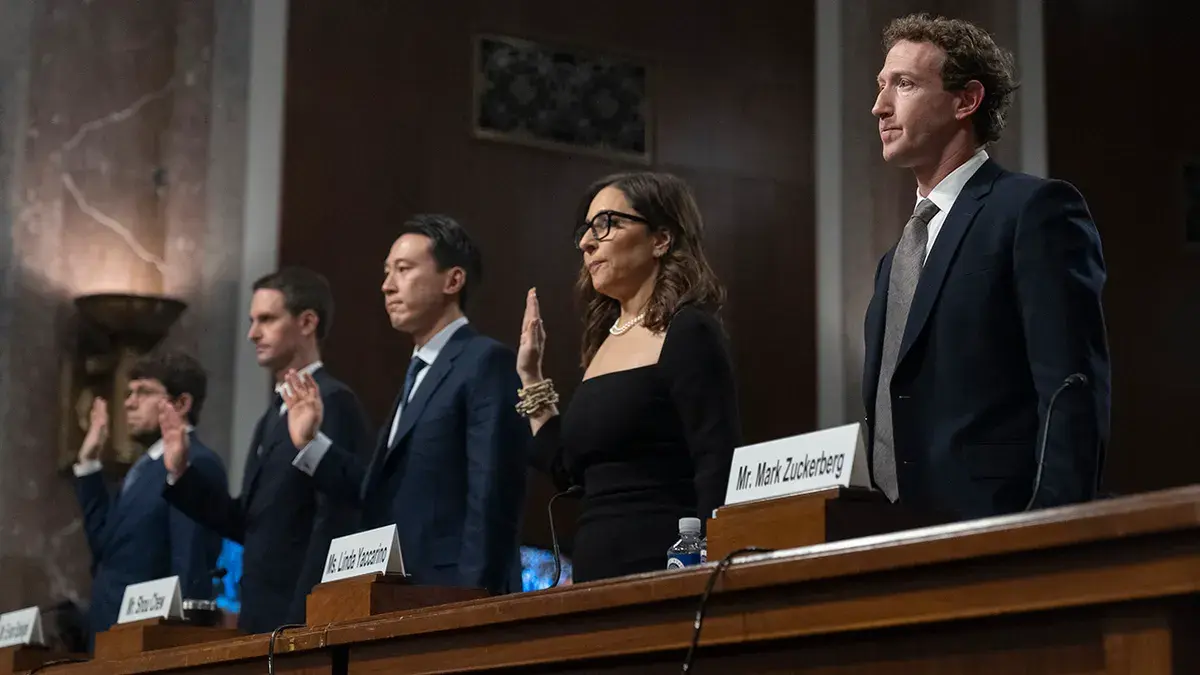
Continued growth in concern, especially through large scale media sources – especially that which lacked the academic care of previously mentioned sources – pertaining to SM resulted in moral panics, particularly among parents and others concerned from a parental standpoint. Much of this moral panic is extremely recent, and continues into 2026, drawing from previously stated concerns. Large media sources took existing research, and adding journalistic flair, labelled SM “tsunami of harm”, a “public health issue” that is “killing us all” and a tool that is “ripping society apart” (Milmo et al., 2026; Stanley, 2018; Wong, 2017). Furthermore, major Congressional hearings occurred in the United States, where major figures such as Mark Zuckerberg and Shou Zi Chew (CEO of TikTok) were accused of major misconduct, gaining major attention and thus increasing outrage, moral panic, and fear; Zuckerberg’s apology to parents whose children had been harmed, but lack of direct acknowledgement of further action to prevent this sparked concern (Guardian News, 2024). Lotrea (2018) argues that some aspects of these hearings, particularly poor questioning by some senators “helped Zuckerberg redeem, to a certain extent, his reputation”, but, ultimately these hearings demonstrate the broader narrative of moral panic in which media and culture misconstrued or carelessly handled data so as to bring about panic, rather than a more controlled concern.
Contestation of Evidence and Policy
As an important feature of the constructionist framework, acknowledgement of contestation of claims is appropriate; with regards to SM, there is some disagreement and debate over evidence. This section will address this. Whilst popular consensus is generally present regarding the evidence for the problematic nature of SM addiction, this is not without exception; with some major studies and meta-analyses finding contrary claims to the zeitgeist, suggesting that “screen media plays little role in mental health concerns” (Ferguson et al., 2022). Furthermore, with regards to the aforementioned work of Jonathan Haidt and similar major figures, some have claimed that he “tell[s] a scary story” that is “not supported by science”, and have accused his work of being more in the nature of stirring a moral panic (Odgers, 2024). The goal and scope of this essay precludes in depth analysis and discussion of the psychological debates surrounding this issue, but noting these provides insight into the contestation of the issue. However, given that the constructionist view allows for controversy, and does not require full scientific understanding, SM addiction can be considered a social problem notwithstanding these counterarguments.
Policy responses have also been important in both constructing SM addiction as a social problem, and in responding to it. Whilst many of these are recent, they provide some insights. As noted, government reports have assisted in construction of the social problem; similarly, measures such as Australia’s Online Safety Amendment (Social Media Minimum Age) Act 2024 (which came into effect in December 2025), have contributed to constructing SM as a social problem, and have attracted global attention in this regard (Chen, 2026). As with the previous point, this area illustrates the value of the constructionist perspective’s leeway for contestation; despite being highly touted by government and supporters of the act (eSafety Commissioner, 2025), it has been heavily criticised, for setting a “dangerous precedent” (Chen, 2026), and for ultimately being “ineffectual” (Dezuanni et al., 2026).
Conclusion
The historical construction of SM addiction as a social problem grew through research regarding potential harms, which was broadly disseminated. Synthesis of this data by authoritative bodies strengthened these claims, and further growth occurred through other means of reporting, from which moral panics resulted. Government policies also contributed. This is in line with the constructionist view of social problems, in which a social problem is dependent on the public view. Objections and contestations of evidence have been discussed.
Bibliography
Chen, Y. (2026). Missing the right(s) point: How Australia's social media ban fails children and the case for a holistic rights-based approach to online safety. American University International Law Review, 41(2), Article 2. https://digitalcommons.wcl.american.edu/auilr/vol41/iss2/2
Dezuanni, M., Notley, T. and Chambers, S. (2026). Australian teens impacted by the social media ban are getting less news: new research. [online] Available at: https://theconversation.com/australian-teens-impacted-by-the-social-media-ban-are-getting-less-news-new-research-281988
eSafety Commissioner. (2025). Social Media Age Restrictions. [online] Available at: https://www.esafety.gov.au/about-us/industry-regulation/social-media-age-restrictions.
Ferguson, C. J., Kaye, L. K., Branley-Bell, D., Markey, P., Ivory, J. D., Klisanin, D., Elson, M., Smyth, M., Hogg, J. L., McDonnell, D., Nichols, D., Siddiqui, S., Gregerson, M., & Wilson, J. (2022). Like this meta-analysis: Screen media and mental health. Professional Psychology: Research and Practice, 53(2), 205–214. https://doi.org/10.1037/pro0000426
Goode, E., & Ben-Yehuda, N. (2009). Moral Panics: The Social Construction of Deviance (2nd ed.). John Wiley & Sons, Incorporated.
Guardian News (2024). TikTok, Snap, Meta, and X CEOs testify in Senate hearing – watch live. [online] YouTube. Available at: https://www.youtube.com/watch?v=eMNY3zI-TPM.
Haidt, J. (2024). The Anxious Generation: How the Great Rewiring of Childhood Is Causing an Epidemic of Mental Illness. New York: Penguin Press.
Huddleston, T. (2018). Here’s how 19-year-old Mark Zuckerberg described ‘The Facebook’ in his first TV interview. [online] CNBC. Available at: https://www.cnbc.com/2018/04/16/how-mark-zuckerberg-described-the-facebook-in-his-first-tv-interview.html.
Kosola, S. (2026). Connected or chained by social media? Child and adolescent mental health in a digital era. PLoS Medicine, 23(5), e1005099. https://doi.org/10.1371/journal.pmed.1005099
Lotrea, C. (2018). Mr. Zuckerberg and the Internet. An essay on power relations and privacy negotiation. Journal of Comparative Research in Anthropology and Sociology, (1), pp.19–24.
Marwick, A. E. (2008). To catch a predator? The MySpace moral panic. First Monday, 13(6). https://doi.org/10.5210/fm.v13i6.2152
Milmo, D., Bharadia, P. and Taylor, J. (2026). ‘A tsunami of harm’: views on tackling online safety for under-16s in the UK. [online] The Guardian. Available at: https://www.theguardian.com/uk-news/2026/may/26/views-on-tackling-online-safety-under-16s-social-media-consultation.
The New York Times (2025). Combined Print & E-Book Nonfiction - Best Sellers - Books - April 6, 2025 - The New York Times. [online] Nytimes.com. Available at: https://www.nytimes.com/books/best-sellers/2025/04/06/combined-print-and-e-book-nonfiction/ [Accessed 4 Jun. 2026].
Odgers, C.L. (2024). The great rewiring: is social media really behind an epidemic of teenage mental illness? Nature (London), [online] 628(8006), pp.29–30. doi:https://doi.org/10.1038/d41586-024-00902-2.
Sanders, S.H. (2024). Sanders’ Letter to Governors, Arkansas Legislature Concerning The Mental Health Crisis Kids are Facing Driven by Social Media. [online] Governor SHS. Available at: https://governor.arkansas.gov/news_post/sanders-letter-to-governors-arkansas-legislature-concerning-the-mental-health-crisis-kids-are-facing-driven-by-social-media/.
Shannon, H., Bush, K., Villeneuve, P. J., Hellemans, K. G., & Guimond, S. (2022). Problematic Social Media Use in Adolescents and Young Adults: Systematic Review and Meta-analysis. JMIR mental health, 9(4), e33450. https://doi.org/10.2196/33450
Stanley, T. (2018). Social media has become a public health issue - and it’s killing us all. The Telegraph. [online] 23 Apr. Available at: https://www.telegraph.co.uk/news/2018/04/23/social-media-has-become-public-health-issue-killing-us/.
Tabak, A. (2004). Hundreds Register for New Facebook Website | News | The Harvard Crimson. [online] Thecrimson.com. Available at: https://www.thecrimson.com/article/2004/2/9/hundreds-register-for-new-facebook-website/.
Twenge J. M. (2020). Increases in Depression, Self-Harm, and Suicide Among U.S. Adolescents After 2012 and Links to Technology Use: Possible Mechanisms. Psychiatric research and clinical practice, 2(1), 19–25. https://doi.org/10.1176/appi.prcp.20190015
U.S. Department of Health and Human Services (2023). Social Media and Youth Mental Health. [online] HHS.gov. Available at: https://www.hhs.gov/surgeongeneral/reports-and-publications/youth-mental-health/social-media/index.html [Accessed 4 Jun. 2026].
World Health Organization (2024). Teens, screens and mental health. [online] World Health Organization. Available at: https://www.who.int/europe/news/item/25-09-2024-teens--screens-and-mental-health.
Wong, J.C. (2017). Former Facebook executive: social media is ripping society apart. [online] The Guardian. Available at: https://www.theguardian.com/technology/2017/dec/11/facebook-former-executive-ripping-society-apart.

The author
Philosophy, Politics, and Economics student, musician, and founder working on early-stage non-profit initiatives through the "Ambrose Institute".
All work by this author →Read next, in Politics