

Politics · Essay · From the archive
Is There Democratic Justification for a Second Brexit Referendum?
Alexandra Baily · 30 August 2026
30 August 2026
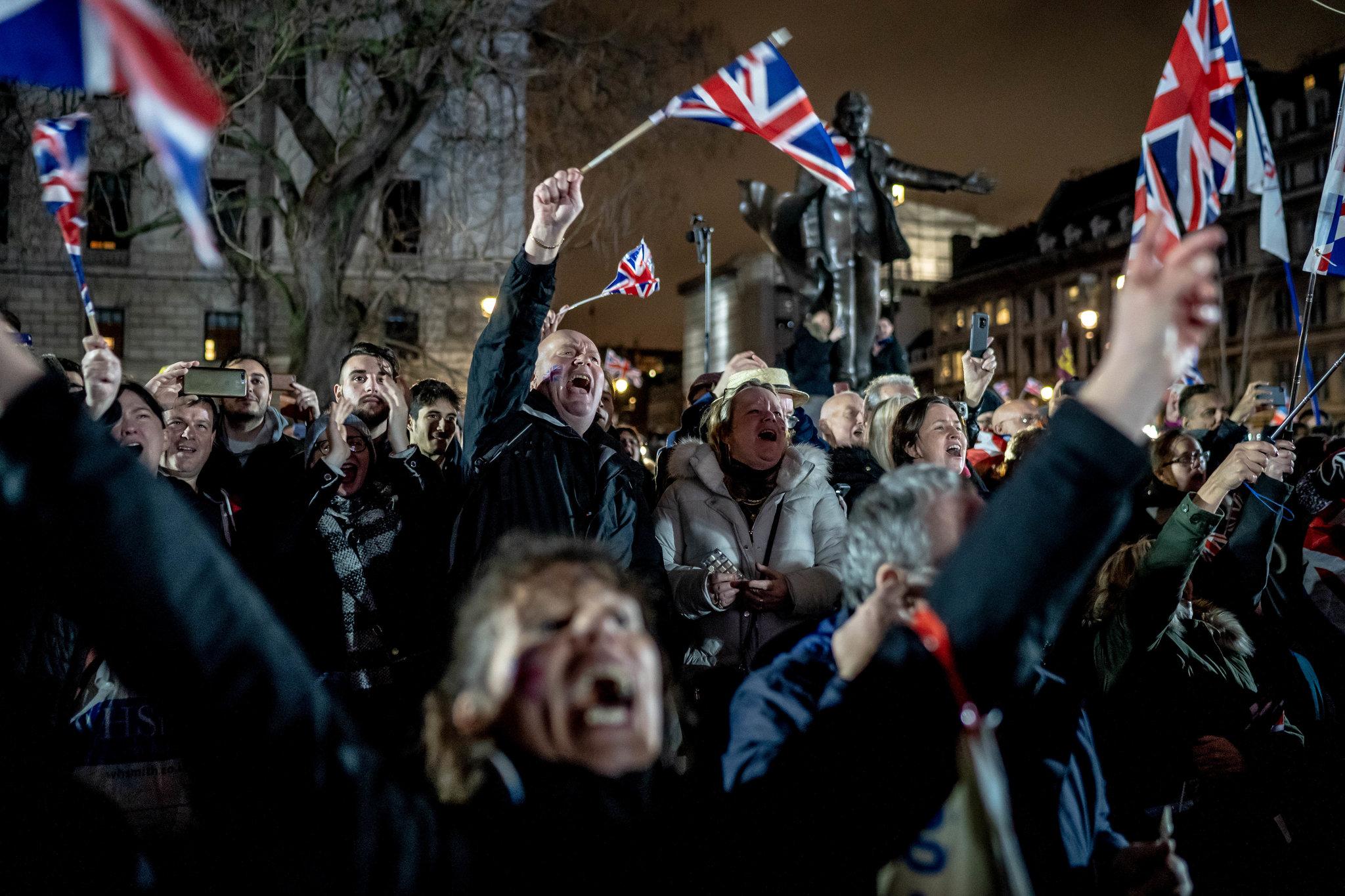
The seemingly age-old debate: should the UK re-join the EU, should the first referendum be considered void, and should we hold a second referendum, one which genuinely encapsulates the people’s choice?
The verdict may seem clear. A new referendum, remaining a pure form of democracy, would be free from the past misinformation and lies which shrouded the two feuding factions. Thus, allowing for an accurate, clear-sighted result without the semantics of Johnson, Casey, and Farage polluting the facts. However, introducing this new, shiny referendum could render Britain’s objective democracy relative. This could make Britain’s strong electoral rules weak, as well as blurring Britain’s national identity. While an evolving franchise could support a second referendum, this could then lead to democracy lacking in finality and certainty. The prospect also provides greater tension when examining public will against preserving democratic trust. Are we to poll continuously until we produce the ‘desired’ result in the face of media?
The following does not concern the intricacies of the Brexit agreement, nor the debates regarding its effects upon Britain. It rather concerns the secondary repercussions of the Brexit discourse and its evident ability to bring British democracy into disrepute.
It is plausible to contest that the circus antics of the 2016 referendum campaign resulted in a poorly informed result, as facts and claims were twisted and misconstrued by both camps. The ‘Leave’ campaign paraded the claim that £350 million was spent to the EU per week; this figure excluded the UK’s rebate and EU funding returning to the UK. Similarly, the ‘Remain’ campaign featured figures which were oversimplified summaries and not direct predictions, such as Brexit costing every household £4,300 by 2030.
Thus, it follows that in light of the last referendum’s inaccuracy, a new referendum would ensure careful and well-grounded figures, to which properly informed judgements can be made. Thus, a second referendum would surely enhance Democracy, allowing for the public education and authentic decision-making required to make such a decision.
While this may be true, the pitfalls remain glaring. A second referendum would demean 33.5 million choices made in June 2016. Classifying these votes as ‘poorly informed’ would have significant consequences upon the people’s mandate and would imply that the government failed to honour its democratic instruction. A new referendum may very well silence the concerns of the masses in succumbing to the echo chamber of the media. To refuse the democratic rights of the public in favour of a fanatic minority casts great similarity to Britain’s pre-democratic oligarchic system.
Even so, this may be defeated by the fact that since 2016, a new generation of voters has arisen, who are living in the consequences of a decision they never voted for. As political decisions are neither absolute nor binding, a second referendum mandated by our evolving generation of voters would support democracy purely. This aligns with the politics of the past, a referendum in 1975 renewed the question of EEC membership, in which voters remained enthusiastic. Therefore, to deny the people a second referendum could pose a serious democratic deficit, forcing unsatisfied individuals to live under a democratic framework they may have never voted for.
However, to consistently accommodate the current electorate would mean sacrificing democratic stability, constantly reviewing constitutional decisions, this proving to be completely absurd. A strength of Britain’s constitution lies in its reliability, holding only 13 referendums nationwide reflects steadiness and a firm hand of authority which has avoided revolution and anarchy for centuries. To constantly re-evaluate the constitution may mean to undermine Britain’s democratic quality, removing all sense of credibility.
The question of a Democratic justification for a second Brexit referendum may lie in one’s definition of the Constitution, and its relationship with the people. Is the constitution ever-changing, organic, unresistant to change and alteration to fit the evolving franchise? Or does the Constitution stand to be a monolith, a stable framework which is not subject to continuous re-evaluation and modification. It is arguable that the justification of a second referendum lies not in facts or whether Brexit was colossal for the country, but is rather subject to democratic interpretation, and whether democracy means undoing the carefully made choices of the past.

The author
I’m a gap-year student who writes about politics, ethics, and history. My work draws upon political behaviour, historical turning points, and the ideas that drive institutional change. I write to clarify my own thinking, challenge assumptions, and share the curiosity that motivates my work.
All work by this author →Read next, in Politics
- Applying Xi Thought to Taiwan John J. Parman
- Nuisance Politics: How Pressure Groups Can Hinder Democratic Operations in the UK Alexandra Baily
- US Withdrawal from Afghanistan: Causes and Consequences Mark Cusack