

History · Essay · The Weekly, No. 6
Discovering Setsu Koizumi: The Muse “Behind” Lafcadio Hearn
Nicholas Parlitsis · Independent · 7 September 2026
Independent · 7 September 2026
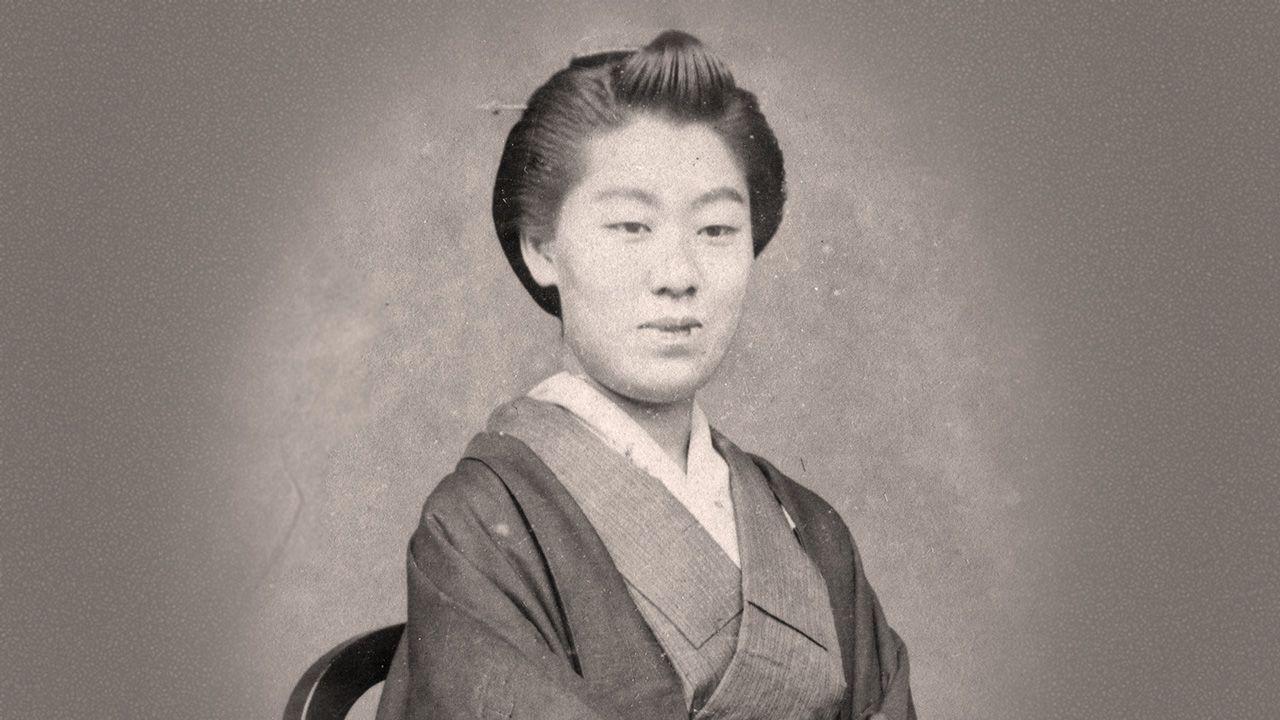
Lafcadio Hearn has long been heralded to be one of the major contributors in the cultural transmission between the emerging nation-state of Japan and the United States during the early twentieth century. While interest in his work has waned in contemporary scholarship, at the turn of the century his contributions inexplicably linked Japanese cultural anachronisms to the average reader in the United States. Perhaps his most famous work, the Kwaidan (pronounced kai-dan in modern Japanese), was published in 1904 shortly before Hearn’s untimely death and was an immediate success in the eyes of the Western audience for making Japanese “ghost stories” available for English speakers. Hearn’s genuine fascination with Japanese culture rooted itself in tradition opposing modernity, he longed for the “Old Japan” to remain as he witnessed the rapid modernization and re-education of the Japanese citizen following the installment of the Meiji government. Indeed, the fabric of Japanese society had forces attempting to push away the traditions of the past, in favor of modernity and having prestige on the now relevant global stage. Despite the implied necessity of adapting to the ways of the outside world, Hearn appears to have truly felt that Japanese culture should remain within the “Old Ways”. Attention to detail was the most important element of his literary writing, as he wanted to be sure his reading audience understood the ambiance of ghostly retellings to truly appreciate the culture for what it really is, not what it is assumed to be, that is, unusual.
His peculiarities can be understood in part due to the efforts of his wife, Koizumi Setsu, who wrote an autobiographical memoir titled Reminiscences of Lafcadio Hearn, which was translated nearly fifteen years after his death. Having access to the written memoir of Hearn’s surviving wife is important for two reasons: firstly, it gives a “solidified” confirmation of his attitude during a time of significant social change insofar as she witnessed these behaviors firsthand. Secondly, for the historical record, confirms that Setsu was the “mouthpiece” to Japanese culture for Hearn, in that she was the one to translate the “ghost stories” for him – these were the basis of the Kwaidan. Surprisingly, very little scholarship exists regarding Koizumi’s contributions for a work which at the time was largely regarded highly by the Japanese and US social circles. This essay aims to closely examine the memoir written by Koizumi to re-conceptualize her place within the cultural transmission process as a mnemonic device while also evaluating the Oriental/Occidental paradigm during a period of great sociocultural change. Before closely reading Reminiscences, I would like to establish the historical backdrop for Hearn’s arrival in Japan, as it is essential to understanding his motivations as an interpreter of cultures. After the backdrop is established, I will then move to situating Hearn within these movements, while also locating his wife Setsu and the importance of language.
The time of Hearn’s arrival in Japan occurred during what many historians today refer to as the “Late Meiji” period within Japanese history. Simply defined, “Early Meiji” is used to denote the time from 1868-1889, and “Late Meiji” is used to denote the time from 1889-1912 – the mark being the promulgation of the Meiji Constitution into official law. Hearn’s arrival in Japan only a few years following the introduction of a Western-style constitution means that he witnessed these social changes as they unfolded and was intimately aware of the emphasis placed on moving “beyond” the traditions of the past. Figures such as Fukuzawa Yukichi and Tetsujiro Inoue placed significant emphasis on the Japanese nation-state adopting the Western conceptualizations of the world in topics such as national morals, etiquette, education, and religion. The previous Tokugawa government had very limited exposure to the outside world but were not totally unaware of the events happening within the “sphere” of Asia. Japan knew about the Opium Wars in China during the early nineteenth century for example, something which had significant forbearance on the attitude of Japanese people following the arrival of Commodore Matthew Perry in 1853. After the Meiji government was installed fifteen years following the arrival of Perry, the conundrum at hand was to maintain an identity of Japaneseness while also implementing Western sensibilities on all levels of society. As we examine the work of Hearn and Koizumi, awareness of the relationship between the Occident (West) and the Orient (East) against the trends of the time of writing should remain at the very least within the peripheral scope of this study. Another dimension to consider is the growing concern about Japan as a global presence – not only did Japan successfully defeat China in the first Sino-Japanese War in 1895, shortly after Hearn’s death the Japanese also defeat Russia in the Russo-Japanese War in 1905. While Hearn and Koizumi do not refer to these incidents directly, in concern of the Orientalist/Occidentalist paradigm, the focus on Japan was steadily increasing globally as Hearn prepared to release his final two works. Undoubtedly the timing of release had some positive effect on the reception of the process of literary transmission.
Hearn was born on the island of Leucadia, located in modern day Greece in 1850 to the British Army surgeon Charles Hearn and Greek mother Rosa Antonia Cassimati. Life was unstable from the beginning; his upbringing was eventually left to a great aunt in Ireland after both his parents left him behind. Growing up with the feeling of displacement was quite important to his development as a writer, the experience of diaspora was a core part of his identity. In fact, being raised under the thumb of Catholicism ironically caused him to seek out mythologies as a child, fostering an early interest in the strange. Hearn arrived in Japan in 1891 and would spend the remainder of his days there until his death in 1904. He would quickly marry Koizumi Sestu after his arrival. Despite having accrued some level of fame as a writer stateside, Hearn accepted a position as a university teacher in Japan after departing from Harper’s Weekly upon his arrival in Japan. At this point in time, he had already published works on the West Indies about the concept of creolization alongside the budding scientific thought within American writing. Hearn’s infatuation with the “Old Japan”, as pointed out by Rie Askew in her article “The Critical Reception of Lafcadio Hearn Outside Japan” suggests a reinforced vision of the “masculine” West and “feminine” East for his works which grapple with historicizing Japan. It is here where Askew is particularly enlightening in her analysis – Hearn’s attitudes about the early twentieth century “race problem” and “culture problem” very much extended into his conceptualizations of Japan. Askew’s views are shared by the scholar Tomomi Nakagawa, who confirms the influence of American social scientists such as Herbert Spencer having significant influence on the writing style of Hearn, specifically about how he tried to rationalize Buddhism and Shintoism against modern scientific thought.
Koizumi Setsu was from a low-ranking samurai family in Matsue, located in the western part of the Honshu landmass. Within her memoir, she confirms Hearn’s arrival in the area because he accepted a position at the Middle School and Normal School, additionally helping at Waseda University, teaching for a short period of time. Unfortunately, her memoir does not discuss her life prior to marriage, rather it focuses solely on her time as the wife of Hearn. Reading the memoir gives the reader a clear visualization of the love and loss of her husband despite all his peculiarities. This account is about him; however, a couple things can be ascertained about her from this work: first, her status as a samurai at this period within Japan indicates that she was highly educated – she spoke fluent English and was the translator for her husband who did not speak Japanese in the slightest. Her husband’s inability with the Japanese language is further confirmed by Yone Naguchi, a close pupil of Hearn’s . Regardless of this inability, within Reminiscences Koizumi writes that Hearn strongly desired all things Japanese and actively avoided Western aesthetics. Koizumi makes the reader intimately aware of his tendencies to isolate himself but does not explicitly state that it was due to his poor language skills. Secondly, her late husband was adopted into her family, her last name was taken by Hearn. This suggests that the marriage to Hearn was at a minimum strategically beneficial to the family, as it was uncommon for a young unmarried woman to inherit power over family affairs – often a son was adopted in, this is likely the category Hearn fell under with his relationship to Koizumi . He is also one of only a few foreigners given proper Buddhist and Shinto funeral rites following his passing, highlighting the deep respect the Japanese would come to earn for his efforts over the course of his life. It is noted on page 85 that his funeral was held at the Kobudera temple, a Zen Buddhist sect temple. His final resting place is in the public cemetery of Zoshigaya . Koizumi’s memoir illustrates that great detail was taken regarding the process and care which went into selecting the proper rites according to his beliefs and appreciation for these places during his life.
Language and the use of it is perhaps the most important detail within the examination of Hearn and Koizumi. As previously mentioned, Hearn did not speak Japanese despite writing extensively on the budding nation-state during his residency. His understanding of Japan was insightful, the lack of knowledge about a foreign language did not inhibit is natural ability with his own tongue. However, it is presumptuous to assume all these works were accomplished through assumptions by him – Koizumi served as the “filter” for any dialogic barriers he may have encountered. Within the writing process it was undoubtedly Hearn who had the predominant voice, writing for a non-Japanese audience and providing valuable insight into a culture which had begun to pique global interest, yet the fact remains that it was his wife who supported his efforts. If this account is to be taken as a legitimate historical piece, then it must be that we acknowledge her contributions as historically significant. It is on page 36 of Reminiscences where we are privy to the first admittance of this phenomenon – Koizumi begins the page by admitting that “Hearn was extremely fond of ghost stories, and he used to say, ‘Books of ghost stories are my treasures.’ I hunted for them from one second-hand bookstore to another.” Koizumi had no issues assisting Hearn in his writing process, she goes on to suggest that it was quite often that she would tell him these stories and he would make notes and ask questions . Koizumi reasserts this notion by stating “Therefore I had to assimilate the story before telling it. That made me dream.” From this, we can gather than she was doing more than just translating the stories accurately, Koizumi too utilized language as a tool for engagement and imagination for how these stories should sound in English. The production of such a work was the result of a shared dialogue about the setting and tone of the stories. Hearn adapted twenty stories in total for the final rendition of Kwaidan, passing away shortly after submitting the manuscript for review. Koizumi acutely points out that he never got the satisfaction of seeing the book be published, something she felt sorry about . Shockingly like this work being done is the work of Arthur Waley – an English romanticist who stylized the classic Genji monogatari, known as The Tale of Genji, to suite the reading palette of early twentieth century English readers, albeit around twenty years after Hearn’s death . While aiming towards different audiences, the process of wielding language is unchanged, the need to imbue vibrancy and relatability to artistic vision is what set Hearn apart from other writers of his era.
To what end then, is Koizumi responsible for the Kwaidan? Per the Reminiscences, there is no credit claimed by her for the work that was produced. In fact, she spends an exuberant amount of time explaining that it often took Hearn a very long time to write stories because he was so particular about formatting them and pairing them with suitable partners . Undoubtedly, the work is Hearn’s to claim, yet it feels shortsighted to take this claim at face value. Koizumi transliterated numerous stories, even exaggerating details to build excitement for Hearn as he wrote because he himself could not do that. It is here where the earlier discussion about the Oriental and the Occidental becomes especially relevant to the study – it must remain an open possibility that Koizumi participated in this process just as much as her husband did. The “exotic” nature of Japan had slowly begun to enamor the outside world, just as the outside world enamored Japan with its modernity. The dialogue was almost certainly not a one-way dialogue, it was likely a two-way dialogue, and this benefitted the positioning of Hearn and Koizumi as cultural interpreters. While Koizumi’s efforts were directed at Hearn, by proximity, she participated in the process of making “foreign” digestible to an otherwise unreachable audience.
In pointing out this information, it is not an attempt to discredit Hearn in any way, there is plenty of scholarship which supports Hearn’s contributions as they are in the historical canon. The concern here lies with adopting Koizumi Setsu into the same sphere that her husband exists in. As we have discussed, while credit is not claimed by her directly, there is a clear line of influence had on the thought and production of the transcultural material produced by Hearn. While Hearn wrote to try and bridge the historical past of Japan with modern scientific thought, the process of writing Kwaidan appears to be removed from these existing tendencies because of outside influence. He could not have written this without the assistance of a native speaker doing the transliteration for him. Witnessing the social changes happening across Japan also likely played a role in the “need” to produce a work which highlights the intricacies of Japanese folktales to a foreign audience. Koizumi was reserved within positioning herself within this, however the evidence left behind within Reminiscences at the very minimum will allow historians to grasp at her relevance in cross-cultural interpretation alongside her husband and grant her the recognition she rightly deserves.
Bibliography
Askew, Rie. “The Critical Reception of Lafcadio Hearn Outside of Japan.” New Zealand Journal of Asian Studies 11, no. 2 (2009): 44-.
Bongie, Chris. “Resisting Memories: The Creole Identities of Lafcadio Hearn and Edouard Glissant.” SubStance 26, no. 3 (1997): 153–78. https://doi.org/10.2307/3685599.
Bronner, Simon J., ed. “Introduction: Lafcadio Hearn’s America.” In Lafcadio Hearn’s America: Ethnographic Sketches and Editorials, 1–34. University Press of Kentucky, 2002. http://www.jstor.org/stable/j.ctt130j5fq.4
Chow, Rey. “Reading Derrida on Being Monolingual.” New Literary History 39, no. 2 (2008): 217–31. https://doi.org/10.1353/nlh.0.0028Reitan, Richard M. Making a Moral Society: Ethics and the State in Meiji Japan. Honolulu: University of Hawai'i Press, 2010.
de Gruchy, John Walter. “Orienting Arthur Waley : Japonisme, Orientalism and the Creation of Japanese Literature in English.” Retrospective Theses and Dissertations, 1919-2007. T, University of British Columbia, 2000. Accessed May 19, 2024. https://open.library.ubc.ca/collections/ubctheses/831/items/1.0099534.
Eber, Robert. “Lafcadio Hearn: A Biographical Sketch.” The Romantist 3. 73-75. 1979
Fukuzawa, Yukichi, and Eiichi Kiyooka. The Autobiography of Yukichi Fukuzawa. New York: Columbia University Press, 2007.
Gould, George M. -. Concerning Lafcadio Hearn, by George M. Gould, M.D., with a Bibliography, by Laura Stedman. Pennsylvania: G.W. Jacobs & Co., 1908.
Hearn, Lafcadio. Kwaidan: Stories and Studies of Strange Things. 1904
Hendry, J. (2010). Marriage in Changing Japan: Community & Society (1st ed.). Routledge. https://doi.org/10.4324/9780203841334
Koizumi, Setsu. Reminiscences of Lafcadio Hearn. Houghton Mifflin company, 1918, 1918.
Nakagawa, Tomomi. “Scientific Thought of Lafcadio Hearn: A Case of Interpreting Japanese Art.” Review of International American Studies 7, no. 2 (2014): 33–59.
Noguchi, Yoné. Lafcadio Hearn in Japan, by Yone Noguchi ... with Mrs. Lafcadio Hearn’s Reminiscences; Frontispiece by Shoshu Saito, with Sketches by Genjiro Kataoka and Mr. Hearn Himself. New York (State): M. Kennerley; Kelley & Walsh; [etc., etc.] 1911, 1911.
Pyle, Kenneth B. The Making of Modern Japan. 2nd ed. Lexington, Mass: D.C. Heath, 1996.
Ravina, Mark. To Stand with the Nations of the World: Japan’s Meiji Restoration in World History. New York: Oxford University Press, 2017.
Reitan, Richard M. Making a Moral Society: Ethics and the State in Meiji Japan. Honolulu: University of Hawai’i Press, 2010.
The author
Independent researcher with interests ranging from early modern Japanese history to contemporary global politics. Holds an M.A. in East Asian Languages and Cultures and a B.A. in History from Rutgers University.
All work by this author →Read next, in History
- Wait for Me, I'm Gone! Alexandra Jane Patterson
- The Illusion of Reform: How U.S. Presidents from Harding to Roosevelt Shaped — and Dodged — Federal Responsibility, 1921–1941 Alexandra Baily
- Operation Harvest: The IRA’s Border Campaign Mark Cusack