

History · Essay · From the archive
The Illusion of Reform: How U.S. Presidents from Harding to Roosevelt Shaped — and Dodged — Federal Responsibility, 1921–1941
Alexandra Baily · 7 September 2026
7 September 2026
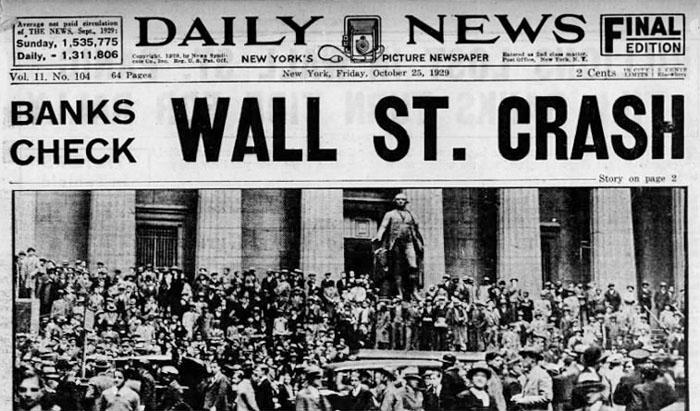
The remarkable decades of the roaring twenties, the dire thirties, and the anxious forties are often described as the much-needed reformation of the federal government. The years which saw the pendulum swing from Harding’s laissez-faire economy to FDR’s interventionist New Deals, are widely considered the formative years that saw the government as interventionist, even paternalistic, assisting the people through boom, bust and recovery every step of the way. This increased role was purely a reactionary measure amidst an uncertain and unbearable period of American history. The events of the Wall Street crash and the subsequent depression forced the need for increased federal involvement, which all presidents arguably recognised, but did not express a commitment to. While these presidents featured aspects of greater central governance within their domestic agenda, this may not be the great commitment of federal responsibility that is often attached to this period.
Regardless, some may maintain that, through Harding and Coolidge’s administrations, the role of the federal government was redefined. Some may refer to Harding’s advocacy of improved anti-lynching laws, recognising government responsibility to protect its citizens from violent attacks and discrimination. Furthermore, Harding introduced a new Veterans’ Bureau which provided federal aid for WW1 war veterans. It is notable that Coolidge also showed hints of support of an increased role of the federal government in domestic policies through federal road building via the Federal Highway Act. However, these few concessions may be too feeble, considering the grave outpour of need experienced in the 1920s.
For instance, the presidency of Harding and Coolidge remained largely business oriented. Harding's 'return to normalcy' presidential campaign featured promises for "less government in business and more business in government," demonstrating his small government approach. This is further evidenced by the high protective tariffs (Fordney-McCumber Tariff Act) which sharply hiked foreign imports to reduce foreign competition, directly favouring domestic firms. Furthermore, Coolidge’s administration continued this partnership and he supported the Revenue Acts of 1926 and 1928, slicing federal taxes and reducing the national debt. Coolidge even famously declared that “The business of America is business”. These measures perhaps validate a different portrayal of government intervention, evident in the economics of the ‘roaring twenties’.
One might advocate that the presidency of Herbert Hoover showed a commitment to an increased role for the federal government, this being characterised by the aftermath of the Wall Street crash caused by the laissez-faire deregulation of past republican presidencies. The emergency relief measures introduced under Hoover, later adopted by FDR including the bank holiday, support this perspective. However, Hoover’s actions were arguably not a commitment, but a desperate plea which proved ‘too little, too late’, as ‘Hoovervilles’ (impoverished communities) grew. Hoover’s ‘rugged individualism’ ideology characterised his stance of limited government, his acknowledgement for the federal responsibility surfacing long after the crash. Therefore, while some may maintain that Hoover’s presidency portrayed a responsible government in crisis, the limited expansion of the federal government’s powers may indeed prove the opposite.
It is most argued that the presidency of FDR demonstrated the greatest expansion of the role of the federal government in domestic policies. There are many claims that FDR’s alphabet agencies redefined the government’s role profoundly, in which some agencies were even declared unconstitutional due to the overarching state power. However, FDR’s measures were only temporary, aiming only to recover the economy which remained in grave depression. For example, FDR’s First New Deal featured emergency measures such as the bank holiday to stabilise banks and jump-start recovery. Furthermore, FDR’s Second New Deal saw further structural reforms, such as the Social Security Act which introduced significant financial support to many. However, as the economy showed signs of recovery in 1937, FDR reduced deficit spending and sharply cut back on relief programmes and government expenditure, showing not a new sense of federal responsibility but a willingness to act necessarily in times of adversity. Thus, FDR’s presidency may demonstrate his administration to be a proactive body, expanding and limiting the role of the federal government when required, never cementing a strong responsibility.
Thus, it is not absurd to suggest that the presidents of the early 20th century were not the committed pioneers of government responsibility as these changes weren’t either permanent or long-held ideological agendas, but were rather necessary choices. However, if we are to suggest that government responsibility is entirely pragmatic, we must then ask whether the growth of federal responsibility can truly be credited to presidential leadership. Is it the pressures of political circumstances that force their hand? The evidence suggests it is the latter: these presidents were managers of crisis, not architects of a new federal order.

The author
I’m a gap-year student who writes about politics, ethics, and history. My work draws upon political behaviour, historical turning points, and the ideas that drive institutional change. I write to clarify my own thinking, challenge assumptions, and share the curiosity that motivates my work.
All work by this author →Read next, in History
- Wait for Me, I'm Gone! Alexandra Jane Patterson
- Discovering Setsu Koizumi: The Muse “Behind” Lafcadio Hearn Nicholas Parlitsis
- Operation Harvest: The IRA’s Border Campaign Mark Cusack