Politics · Essay · From the archive
America: The Promise of Free Speech and What That Looks Like Under the Current Administration
An article analyzing the First Amendment under the current administration in the United States.
Caitlin Salevski · University of North Florida · 23 September 2026
University of North Florida · 23 September 2026
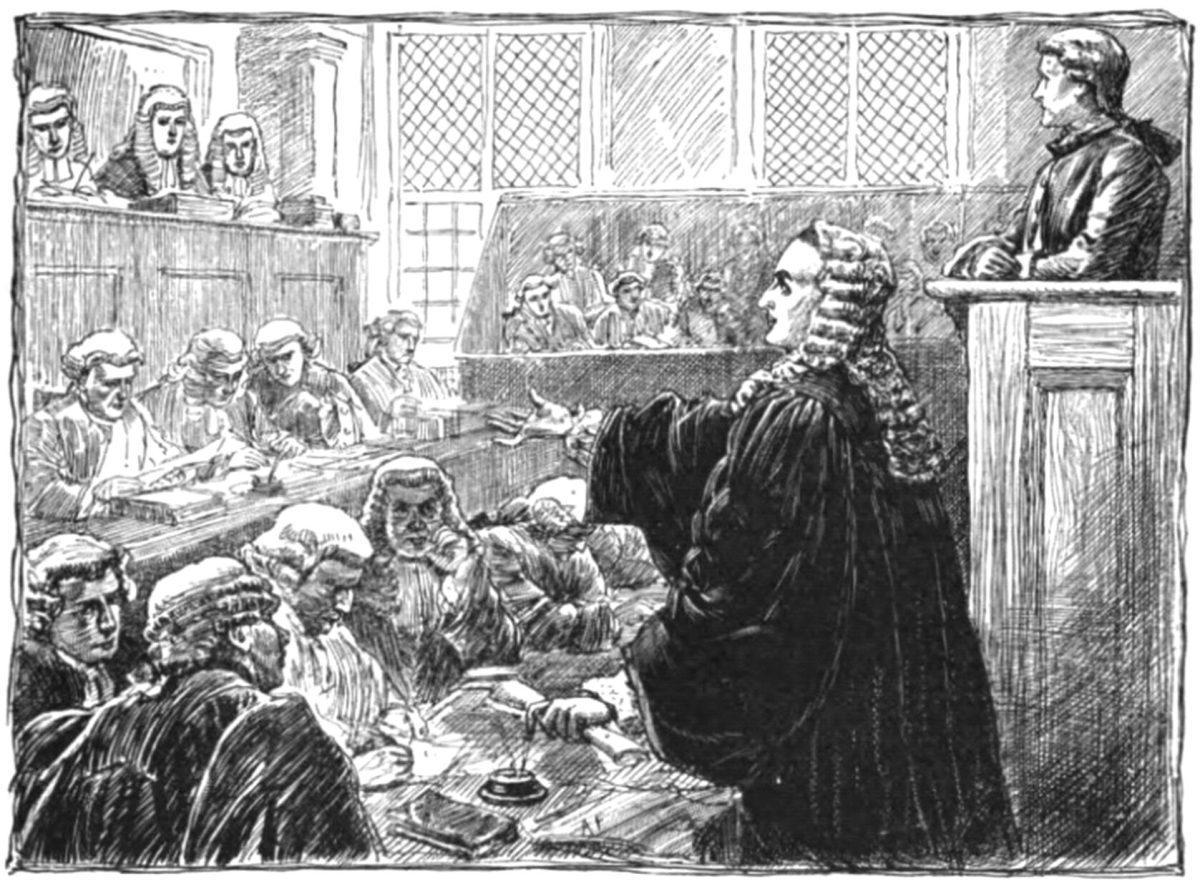
What is the First Amendment? If you ask anyone who is a citizen of the United States, they'll most likely tell you that it's "freedom of speech." The actual amendment states, "Congress shall make no law respecting an establishment of religion, or prohibiting the free exercise thereof; or abridging the freedom of speech, or of the press; or the right of the people peaceably to assemble, and to petition the Government for a redress of grievances." (U.S. Const. amend. I) The freedom of the press, and the "prohibiting the free exercise" clause is what this article will focus on.
The First Amendment was proposed by James Madison in 1789, and was ratified in 1791, which made it eligible to be written into the Constitution (FIRE, 2026). If the amendment is broken down, there would be five parts; however, only the second, third, and fourth will be analyzed here. The second part of the amendment states, "[Congress shall make no law]… abridging the freedom of speech…" (U.S. Const. amend. I) This is generally taken to mean that the government is not allowed to make a law that prohibits people from speaking their minds, whether it is in a public place, on social media, or blasting through space. Citizens have the right to say what they believe in, and the government cannot punish them for that.
The third part, "…or of the press;" is an issue that is currently developing in the US right now. President Donald Trump just announced on Truth Social that "I am banning Fake News CNN, MS NOW… and Politico… from the White House as a result of their constant "reporting" FAKE NEWS!" He then goes on to promise, "Other Fake News Media Outlets to follow." (Trump, 2026) Citizens, news outlets, and politicians alike have become enraged at the encroachment on the freedom of the press that is a fundamental right of all citizens of the US.
However appalling citizens may find this, the situation has occurred before, in the case of Richard Nixon after the Watergate scandal in the 1970s. Nixon banned the Washington Post from the White House, though he did not pull their official White House credentials (KXTV, 2017). In contrast, the Trump administration has gone in a different direction. CNN reporter Brian Stelter states, "CNN reporter Betsy Klein was denied access at the White House on Saturday morning and her press pass was seized." MS NOW and Politico reporters experienced similar denials of access and seizure of passes (Stelter, 2026).
However, the Trump administration is telling a different story. President Trump states that he will not tolerate what he deems "fake news," and his actions make that abundantly clear. In an article by Fox News, Sarah Huckabee Sanders, a governor and former White House press secretary, argues, "I think it's hard for you to argue against a free press when you're literally standing in the Oval Office asking questions of the president of the United States." (Wulfsohn, 2026) However, this comment was presumably made excluding the presence of the three banned outlets. What is interesting is that the Trump administration has moved to block outlets and individual journalists before, but was blocked by federal judges (Wulfsohn, 2026).
The key takeaway is that while there is nothing inherently wrong with wanting "accurate" coverage, the freedom of the press is a right that involves the citizens. It is up to them to have all of the facts and be able to make their own opinion. The fact that the administration is trying to exclude or prohibit these outlets from reporting, as is their right, is concerning to many Americans, because accuracy is not equivalent to positive press. This matters for future administrations, as it could set a precedent for the presidents who follow. The right to free speech, and by default, the freedom of the press, is something that Americans are raised believing in, and the goal of the Constitution was to ensure that those freedoms would never be taken away by a tyrannical executive power. This issue is still developing.
Bibliography
Foundation for Individual Rights and Expression (FIRE). (n.d.). The First Amendment. https://www.fire.org/research-learn/first-amendment
KXTV Staff. (2017, February 24). Trump not the only president to ban media outlets from the White House. ABC10. https://www.abc10.com/article/news/local/trump-not-the-only-president-to-ban-media-outlets-from-the-white-house/103-414543179
Stelter, Brian. (2026, September 20). CNN, MS NOW and Politico denied access to White House after Trump ban. CNN. https://www.cnn.com/2026/09/19/media/trump-msnow-cnn-politico-white-house-ban
Trump, Donald J. [@realDonaldTrump]. (2026, September 18). I am proud to announce that, effective immediately, I am banning Fake News CNN, MSNOW (who recently changed their name from [Post]. Truth Social. https://truthsocial.com/@realDonaldTrump/posts/117293599348325006
Wulfsohn, Joseph A. (2026, September 18). Trump announces White House ban against three media outlets. Fox News. https://www.foxnews.com/media/trump-announces-white-house-ban-three-media-outlets
U.S. Const. amend. I.
The author
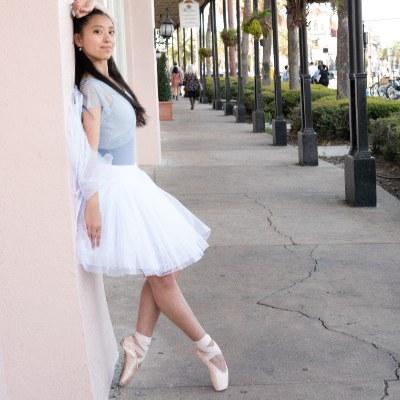
Hi, I'm a student getting my Associate in Arts degree from the University of North Florida. I plan to get a Bachelor of Arts in English with a minor in Secondary Education at Rollins College. I am particularly interested in political issues and underrepresented populations. In my free time, I enjoy ballet dancing, teaching dance, and reading romance, religious, and contemporary novels.
All work by this author →Read next, in Politics
- Applying Xi Thought to Taiwan John J. Parman
- Nuisance Politics: How Pressure Groups Can Hinder Democratic Operations in the UK Alexandra Baily
- US Withdrawal from Afghanistan: Causes and Consequences Mark Cusack