

Fiction · The Weekly, No. 5
Über Lord
A Mark Barrett story.
James Ross · 4 September 2026
4 September 2026
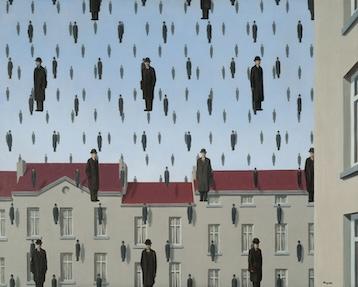
“In broken mathematics
We estimate our prize.”
‘Mr. Barrett?’
I turned to see a smartly dressed woman standing beside me. I’d been enjoying the relative peace of central London in the sun, sitting at a cafe table on the river at Southwark, my back to the re-creation of Shakespeare’s Globe theatre, the dome of St. Paul’s visible on the other side of the broad river Thames. It was a warm spring day with no wind, and I’d filtered out the background noise of traffic and the faint rumble coming from the nearby railway lines. I’d been daydreaming. I stood, ‘Yes, that’s me.’
We shook hands. Her grip was dry and firm. ‘My name is Jane Charter, I work for Mr. Lord.’
Tim Lord, I thought.
The Über-Lord.
Prior to this meeting, a brief but enlightening google search had revealed that Tim Lord was not only a super-geek billionaire, but a venture-philanthropist, a jiu-jitsu black belt and expert rock climber. He was the English Elon Musk, people said, a European Tai Pan, and, randomly, that he owned most of Luxembourg. Also he owned nothing. And he was the 21st Century Thomas Edison. The next article on the search engine revealed he was a vegan. Another that he ate only meat. He slept three hours a night. He only slept on Sundays. He only slept with supermodels. He was gay. He was straight. He was a hermaphrodite. He worked for the Russians. He worked for the Chinese.
These factoid-replete articles were endless and mostly contradictory, and there were any number of conspiracy theories attached to each and every one of these debatable facts. He was building an underwater city. He was planning to live on Mars. He was planning to reduce world hunger, the world population, and the world’s national debt. And for each of those, the opposite theory also existed. I wondered how many of these untruths were planted by his rivals, and how many he’d planted himself.
Jane Charter straightened her skirt as she sat down opposite me. She placed her phone on the table, lining it up perfectly with the straight-edge of the pattern carved into the wood, and opened her briefcase. I sat back down and waited. As she took out a folder, she was speaking, ‘Mr. Lord has a contract that he would like you to undertake. He is currently working on a project for which there are five separate elements; each one is being developed independently, in hermetically sealed IT units across greater London.’ She opened the folder on the desk. ‘Mr. Lord would like to put you on a retainer for the next four weeks.’ She looked at me. ‘You would be on call day and night. As and when each independent project reaches fruition, he would like you to collect it and deliver it.’
‘Do you have the addresses?’ I asked.
‘You will be given the addresses as we move forward.’
Her hair was pulled back as tightly as her delivery of the lines she was speaking. I looked at the first sheet of paper, and saw that the money was good. I’d be on call 24/7, for four weeks. Ok, I thought. For that rate, I can be on call.
‘If the contract is finished within the four-week period, you will still get the full stipend, as agreed,’ she said, pointing to the figure I’d just clocked. I wondered what underwear she was wearing. Any girl who used the word stipend with a straight face just had to be wild in bed.
Silk, I decided.
She pushed forward a sheaf of papers. ‘We need you to sign an NDA before I can give you any further details.’
This gave me pause. ‘I don’t sign NDAs,’ I said.
She too paused. Her eyebrows were raised in a question mark.
Quietly, I repeated what I said.
‘Then we have a problem,’ she said.
‘I don’t give up information on my clients, or on the work I do for them,’ I said. ‘Not ever. Not to anyone. Unless they involve me in something illegal, in which case the deal is off. Otherwise my relationship with the client is absolutely discrete. Signing an NDA would suggest that my silence can be bought.’
‘Suggest to who?’ she asked.
‘To me.’
‘Can you be bought?’ she asked.
‘No.’
She stayed quiet for a moment, her eyes glancing up and to the left to one side. I realised she was listening to someone speaking in an earpiece, though it was so small I hadn’t noticed it up until this point. She nodded imperceptibly, then looked up at me, began tidying away her papers. ‘It really is standard practice,’ she told me.
‘I know,’ I said.
‘You must lose lots of work.’
‘It’s my operating system,’ I said. ‘It works for me.’
She raised a single eyebrow this time, giving me slightly less than one eighth of a smile. Mentally, I added to myself, black silk.
And I knew I’d never find out.
‘Your stubbornness is admirable,’ she said. ‘Though misplaced.’
‘A man must have a code.’
‘Omar Little,’ she said, her expression reached almost a full quarter of a smile and she glanced over my shoulder, from where I heard another, male, voice behind me say, ‘I prefer to say, “I budge for no man’s pleasure”.’
Jane Charter visibly blushed, and I turned to see Tim Lord, in person, standing behind me.
I stood. ‘Mercutio,’ I said.
‘Shakespeare’s Omar Little,’ he said, which I thought was stretching it just a little. ‘Leave the paperwork, Jane, I’ll take it from here,’ he said.
‘Righto boss,’ she said, suddenly human, and I liked that. I watched her walk towards a large Mercedes jeep, as Tim sat down at the seat she’d just vacated. I turned back to him. He wasn’t tall, or wide, but he looked physically capable. He stretched out his hand, ‘Tim Lord.’
I took it and we gave a brief shake. ‘Mark Barrett.’
He said, ‘Call me Tim.’
‘Mark,’ I said.
He turned and looked towards the Globe theatre. ‘Should we go inside?’
‘Ok,’ I said, thinking he meant the bar next door, but as we crossed the road, I realised he meant the theatre itself. We walked through the gates, up the side of the building and as we approached the stage door. a dwarf, an actual real-life theatre dwarf, opened it for us, saying, ‘Good morning Mr. Lord.’
‘Morn’ Steve,’ he said.
We walked through the back of the theatre, cut through narrow corridors and then stepped out onto the stage. Tim paused to look up and out at the stalls. ‘Imagine, four hundred years ago, walking out onto this stage and performing, in this theatre, to an audience of hundreds, possibly thousands, all packed in, waiting to hear the words written by the Upstart Crow himself.’
‘It’d be magic,’ I agreed, my voice hushed, yet still managing to reverberate in the silence.
‘If I had a time machine,’ he said. ‘It’d be the first place I would travel to.’ This suggested to me that he was probably working on a time machine. He went to the edge of the stage and sat down, his feet dangling over the edge, and I followed suit, sat down beside him. After no more than a few moments, someone in a waitress uniform came over with a tray of coffee and ginger-snap biscuits and placed them on the stage between us. I waited as he played mother, pouring us both a large mug of gorgeous-smelling black coffee, especially welcome in light of my middling, mid-morning hangover. He left his coffee black but added copious amounts of cream and sugar to mine. He’d done his homework. As I picked up the coffee and took a sip, I had the feeling I was being groomed. Either way, it was the best coffee I’d tasted in a long time. He picked up a ginger snap. ‘My favourite,’ he explained, dunking it into his coffee.
I’d been briefly disappointed the waitress wasn’t dressed as a wench, but otherwise, I was enjoying the experience. The lady lawyer, the coffee, the theatre, with a real dwarf. It was a performance. Facing out towards the groundling area in front of the stage, he asked, ‘Did you see the tattoo on the waitress’s wrist?’
I had. A series of numbers.
‘She’s Romanian,’ he said. ‘The girls who get their legal right to remain, they tattoo the date on their arm or their neck.’
‘It’s an achievement,’ I said.
‘Truly,’ he said. Then he said, ‘So.’
I sat a bit forward, just an inch or two. I was very interested in what he had to offer me. This was Tim Lord. Tech billionaire. Visionary. Black belt. Thrill-chaser. ‘So,’ I repeated.
‘This job I have for you,’ he said. ‘The work I’m doing is sponsored by the UK Government,’ he said. ‘So everything I tell you is covered by the Official Secrets act.’ He opened a battered leather shoulder bag. I doubted it was pre-distressed, it looked original, the leather thick and curled at the edges, the brass buckles old and tarnished, one of them a replacement, the shoulder strap itself repaired numerous times. Only the seriously rich can afford original gear like that, I mused. I wondered how many flunkies had spent months searching for that particular bag. I wondered who it had originally belonged to? He took out a folder. ‘The details are in here, and I need you to sign that,’ he said, taking out a sheet. ‘Don’t worry, it’s not an NDA. It’s just a contract of employment.’
‘Ok.’ I signed, using a fibretip that I took from the flap pocket of my scuffed Berghaus daysack. He countersigned it and then took a photograph with his phone, which I noted was an original iPhone, a 2007 model, though I doubted it contained the original hardware. After putting away the sheet, he said, ‘I’ve sent you a copy of the sheet.’ He put down his bag, ‘Right. The job.’
‘The job.’
‘You know who I am?’
‘Tim Lord,’ I said. ‘Tech visionary.’
He had the good grace to smile at this. ‘So they say.’
‘Inventor of the Turing Cloud.’
At this he pulled a face as though to say, not quite. He picked up his iPhone again. ‘This is a work of genius,’ holding it up. ‘But do you know how much of the contents was invented by Steve Jobs?’
I shook my head. ‘No.’
‘None of it,’ he said. ‘It was all pre-existing technology. Jobs merely had the vision to put it altogether into one hand-sized package.’ He paused for a millisecond, then added, ‘And the world has been playing catchy-up ever since.’
‘So you’re not the inventor of the Turing Cloud?’ I said.
‘I developed the concept of a shoal of deep-learning algorithms, each working as an intelligent synapse within a quantum brain, what people are incorrectly calling AI, and using that we learned things about predicting human behaviour, the potential of which we’re only beginning to understand. But I didn’t invent algorithms, and I barely understand quantum theory.’
‘If you think you understand quantum theory...’ I said.
‘...then you really don’t understand quantum theory,’ he finished with a brief smile.
The waitress returned, with muffins. Tim had a sweet tooth. His brain probably burned off glucose at twice the rate of four normal men. I remembered he had also developed an idea of dropping tons of graphene dust into the atmosphere over the Pacific Ocean, to see if it could affect the ambient world temperature. The original concept was Bill Gates’, but Old Ginge had used chalk. Graphene was said to be a step up, or down, in the effect it would have in cooling the ambient temperature. But instead of a Krakatoa-like global cooling that the tabloids had predicted he’d bring down on the world, resulting in bad harvests, a mini ice-age, mass starvation and the triggering of El Nino, the Pacific had reacted as it would to a very minor eclipse, cooling a micro-degree in the shadow of the artificial cloud, then swallowing the graphene with barely a burp before quickly returning to normal temperatures. They called him various names, including Rain Man, for his supposed obsessive attention to detail, though the one that stuck over time was Über-Lord. He didn’t appear that obsessive to me. He seemed very relaxed. Very present. He reminded me of a civilian version of Tom Jarvis, my SAS pal. I wondered if they were related. Or had gone to the same school. ‘This is good coffee,’ I said.
‘You like it?’
I nodded, took another sip. ‘Very.’ I asked him. ‘What would you like me to do for you?’
‘Two things,’ he said. ‘Business first,’ he said.
‘Ok.’
‘This is all, officially, secret.’
‘I don’t give away client details,’ I said.
‘So I heard.’
He said, ‘I’ve been working on a brand-new application of technology.’ He glanced across at me to check I was listening, ‘It’s very low-key, very hush, sort of a garden-shed idea I’ve been developing on in my spare time.’
‘The jet engine was a garden shed idea,’ I said.
He nodded. ‘Designed by Frank Whittle. It was so ahead of its time that the RAF ignored it.’
‘The Luftwaffe didn’t,’ I said.
His eyes seemed to light up. ‘The point is well made. “Garden shed” ideas can sometimes pay off. This one might well do that.’ He took another sip of coffee, chewed on a muffin. Then, ‘I’m working on the various parts of it separately, in hermetically sealed research units, so no one is aware of the big picture. What I want you to do is collect each piece of technology and deliver it to me.’
A simple job, I thought.
The last time someone had offered me a simple job I’d been nearly killed in three different countries. In the space of five days. ‘If it’s that important, wouldn’t you be better served using G4, or the army?’ I asked.
He shook his head. ‘This project is far below the radar. If I employ a security company it will only tip off my competitors. And the board of directors at my company, which is probably worse.’ He gave me an almost smile. ‘It’s best if they don’t know I’m working on it.’
‘And yet I do,’ I said.
‘You come well-recommended. And I appreciate your honesty. You were prepared to walk away rather than sign the NDA.’ He picked up the muffin and took another bite, chewed it, obviously enjoying the experience. I suspected he experienced the world in a way I was barely sentient of. Finished, he took a gulp of coffee then looked at me conspiratorially. ‘Can I tell you about it?’ he asked. ‘You’ll be the first one I’ve ever given the full sales pitch to, the first person I’ve ever demonstrated it to.’ There was something child-like about his openness and enthusiasm, but there was also, I felt equally strongly, an almost reptilian certainty about his approach to the world. Step into my river said the crocodile.
‘Sure,’ I said,
‘When I developed the “Turing Cloud”’ and he held up his fingers to indicate the quote wasn’t his, ‘I used existing technology, but in a radical way. I took what was already there, and tweaked it.’
‘Like gunpowder.’
He looked momentarily confused but then he grasped my point; he was quick. ‘Exactly! The Chinese invented gunpowder. It took the Europeans to invent the gun. The technology existed, but no one had put the two ideas together.’ He looked pleased that I was engaging and ran with the metaphor: ‘The steam engine existed in Roman times, but no one thought to put it on wheels until the eighteenth century. The wheeled suitcase,’ he added. ‘We’ve had wheels for millennia, and luggage for just as long. But no one thought to put wheels on a suitcase until about thirty years ago.’ I could see he’d gone off into his mind, but he returned quickly. ‘So all I’m doing, metaphorically, is uniting wheels and luggage.’ He was pleased by this phrase, I could see. I imagined him using it in some future exposition on a TedX special. ‘The idea I have now isn’t new technology. I’m not a coder.’ He used this word like a medieval Robber Baron might use the word villein.
‘You’re a creative,’ I said.
‘I am.’
I could see he was pleased with our conversation.
‘People think creative means like, you write novels or paint or write copy in an advertising agency. And they think that creative is somehow, inherently superior. They give it respect. Plaudits.’
‘You don’t agree?’
‘Creativity is not a gift. It’s completely random; happenstance. It’s just a wiring quirk.’
I’d never heard anyone use happenstance in a conversation before.
‘Creativity it doesn’t imply superiority,’ he continued. ‘People think it’s a cardinal virtue and they give you a respect you don’t deserve because, really, it’s just playfulness.’
‘I think you’ve done enough to deserve at least a certain amount of regard.’
He accepted this. ‘Regard, yes. Note, perhaps. Caution, even.’ He shrugged, ‘I digress. The habit of a playful mind.’
‘The new application,’ I said.
‘Application as a verb, not a noun.’
‘Ok.’
‘Have you ever played Sudoku?’
‘No, but I know the game.’
‘If you’re of a certain mindset it’s an easy game to play. You guess what the numbers are by working out what they’re not. All you really need is a good working memory, because you need to be able to keep a lot of numbers in your mind at once. Tough for humans but easy for computers.’
‘You’re weaponising Sudoku?’ I asked.
He looked at me, couldn’t work out if I was being as ‘playful’ as him, or just taking the piss. It was a bit of both. ‘Remind me not to forget the second point of this meeting,’ he said. Then he continued, ‘Weaponising Sudoku is exactly what I’m doing.’ He leaned forward, ‘Here’s the concept. I can work out precisely what anyone is doing online, by working out what they’re not doing.’ He watched me to see if it had sunk in.
I said, ‘You’d need a lot more computing power than exists in the world.’
‘You’d think so, wouldn’t you? But no. Imagine I want to know what a single person is doing online. I know that person is English. I know he’s using a VPN. I know he’s based in London. My programme immediately slices away huge chunks of irrelevant options, maybe ninety-nine-point-nine per cent of the many trillions of options available. And I’m working in real time. So that cuts away fifty per cent of what’s left, because a lot more than half the population are not online at any particular moment. And by various techniques that are non-tech in origin, I can narrow the options down to maybe just a few hundred million possibilities, which is nothing in computing terms.’
I searched my memory for an analogy. ‘Turing again,’ I said and he nodded. ‘Yes. They needed to break a code with billions of possibilities, so they started with the human side. What phrases are repeated? What times are they repeated, and so on.’
‘Crypto-analysis,’ I said.
‘Exactly! They broke the code using the same skills they would to break a cryptic crossword, in fact, a skill with crosswords was one of the requirements for working at Bletchley Park as a codebreaker.’
‘So you use crypto-analysis to narrow down the final numbers then crunch the remainder?’
He sat back. ‘She said you were quick.’
‘Who?’
He just smiled, then dipped into his battered leather satchel, took out a slim laptop. He opened it and clicked a couple of buttons. ‘Give me a name. We’ll find out what he’s doing.’
Again I heard the crocodile telling me, step into my river. It’s perfectly safe.
‘Jacob Greener,’ I said. ‘Male. Thirty-four years old. London.’
He keyed in the details and turned the screen to me which showed a map of the world, criss-crossed with bright lines that represented, I guessed, internet traffic. He pressed enter and I watched as large sections of these lit-up lines darkened. He paused and pointed to three nodes of light, in Greenland, California and Switzerland. ‘Your friend uses VPNs and cutouts, see?’
I nodded.
He unpaused the programme and it leapt forward. I watched as the bright lines dimmed and the map began to focus in, Northern hemisphere. Europe. England. London. South London. Peckham. Camberwell Church Road. The machine switched to google street view. Greener’s gaff. I stared at this image for a long time. Greener used online security like most people used toilet paper. Layers of it. Every time. Everything was secure. And yet, here he was. Uncovered.
He paused. ‘Another?’
‘James Barrett. London. Age thirty-nine,’ I said. ‘My brother.’
Lord did the same process and we watched as the computer blitzed away loads of non-essential information and dug down until we got to my brother James’ chambers on Chancery Lane.
‘He’s at work,’ he said.
‘He’s always at work.’
‘This is just the front part of the programme, Lord said, ‘The programme gets us to the location, the street outside, you might say, and we use essentially same concept to get indoors too, but I’ll save your friends’ blushes,’ he added. ‘The tech I’m developing gets us into the tech they’re using, deep into it. We use the same principle, calculating what a thing is not, but on a quantum level, and we use the same process to bypass passwords, VPNs, everything. And that’s where the fun starts.’
I watched him close the lid and slide the laptop into his battered briefcase. Last night’s drink was definitely turning into today’s hangover, so I picked up a muffin and ate it, washed it down with more coffee, which still tasted good. He watched me as I digested the food and the information both. I picked up a napkin and wiped my mouth. ‘You’ve weaponised Sudoku to bypass online security.’
He looked about to launch into further exposition, but stopped himself, and just said, ‘Yes.’
‘Cribs,’ I said, the word coming to me at last. ‘That’s what they used to help break Enigma, cribs. Human intelligence, plus computers.’ I pondered this for a few seconds, letting the concept flower. ‘Using cribs and number crunching,’ I said. And Tim Lord had quietened, was watching me, wanting to know my full reaction. ‘You’ve just de-invented online security.’
‘I have.’
‘I can see why you haven’t told the board,’ I said. ‘You’re about to reveal all the secrets in the world.’
‘All of them,’ he agreed.
It was only after I’d left him that I remembered he’d had a second thing to talk to me about. He’d seemed so pleased that I grasped his concept, he’d forgotten to talk about the other thing. I had no idea of how his programme worked in detail, but I got the Sudoku metaphor, and I’d enjoyed that he’d treated me like a fellow-conspirator. But while the concept was neat, and the application of it could be world-changing, whether it actually worked out there in the real world was a moot point. When the hackers got hold of it, as they surely would, they’d use it for nefarious purposes and then someone else, somewhere else, would come up with an antidote. If the computer employed cribs plus quantum level maths to crack security, then some other smart-arse would come up with un-cribbable code, or deeper quantum-level numbers to hide behind. It was the latest step in an arms-race, and while I’d enjoyed the spectacle of his concept in action, on a superficial level it seemed to me that it was just google-on-steroids.
Or maybe not.
Tim had told me there were other elements of the programme that adopted the concepts he’d outlined to break through any online security, and this was the bit that was being developed in isolation, in sealed-off laboratories, by a select of hard-core programmers. They were almost ready to hand the various pieces over, and I’d get to deliver them. I imagined one of the early European traders to China, returning home with a few tubes of gunpowder as a gift to his king, ignorant of how much this coarse-grained black powder was going to change the world.
Two mornings later, just after nine, I got a call and clicked green.
‘Barrett.’
‘Mr. Barrett, this is Jane Charter, Mr. Lord’s PA. The first item is ready for you. I’ve emailed you the details. If you can deliver it by eleven.’
‘On it,’ I said.
She’d already hung up.
When a billionaire über-geek personally chooses you to deliver some hi-tech shit, you do your best to deliver it on time. I checked my emails and there was a message in my spam that had the briefest of details. An E3 post code, a door number, a QR, and a note to tell me they’d give me the drop-off details when I got there.
So, I thought, I’m off to Bow.
The bike started first time, which was always a bonus, a forty-odd year-old kick-start machine can be very grumpy, but it sounded fine, the transverse V-twin giving a nice pulse after I rolled it out of the basement into the back lane and started it up. I was wearing a nondescript helmet, gloves and a spine protector, and apart from that, my normal civvies. I attached the phone to the clamp on the front of the bike and set off.
Bow is part of the old East End of London, but any thought of grimy terraces or ‘London can take it’ photographs of the blitz were erased by rows of nice 1980s housing, plus the odd weird 1960s oddity and an occasional flat-roofed pub. This was not the Bow of The Kray Twins or Sherlock Holmes, this was the Bow of now, which was semi-genteel, semi-working class and largely-middle-eastern, judging by the percentage of people in Arabic, Pashtun and Turkish clothing.
Traffic was light and I got there in under thirty minutes, found the correct number and knocked. The address wasn’t what I expected. Instead of some old re-purposed warehouse with a glittering front of glass and burnished aluminium, this was a semi-detached home of the sort lived in by retired Waitrose managers and devotees of West Ham United. The knock was answered by a thin lady in her fifties who looked at me for a long second then asked, ‘Yes?’
‘I’m here to collect a package,’ I said.
‘ID?’
I showed her the QR on my phone. She took out a small device and scanned it. Then she looked out into the street, studied both directions for a long moment. ‘Wait here,’ she said, disappearing into the house.
I waited for a few minutes, scanning the street too, for what, I wasn’t sure, but sometimes it pays to be a little bit paranoid. I saw the usual urban array of white vans, Bangla BMs and Fiat 500s. She returned and handed me a small box the size of a pack of cards. ‘I’ve mailed you the delivery details,’ she said, unsmiling, and then closed the door in my face. Tech geeks come in all shapes and sizes, I thought. And eras. She was definitely trackball-qualified. Pre-mouse technology, I thought, PMT, happy with my pun, her tech-expertise probably dates back to the eighties and games of Pong on the telly. I checked my watch, almost ten, then the delivery details: St. Martin’s Church Ruislip. Who the fuck runs an IT company from a church in Ruislip? Then I thought, twenty miles through London, that’s cutting it fine, so I got on the bike and got going.
As it turned out, when I arrived at St. Martin’s at five minutes to eleven, feeling slightly sweaty after a near-miss with a dumper truck who decided to run left as I undertook him, I was met at the church door by a priestly-looking type, all handsome features, black frock and five o’clock shadow, who instructed me to go next door. I checked my watch, heart-rate still slowing as I knocked on the door of the church hall. Ten fifty-seven. Three minutes to spare. My knock was answered by a cute girl with a severe fringe who checked my QR, accepted the package, smiled, and then shut the door in my face.
Do they all shut the door in my face?, I thought. Is it a game they play? Who can shut the door in the courier’s face with the least fuss and bother? If it was a game, they were scoring even right now. I went back to the road, got on my bike, sat astride it with the engine running while I checked my emails, of which there were none. Again, I checked the street. Nothing amiss, but I felt a tickle at the back of my neck. It was getting cold so I zipped my jacket tight, kicked the bike into gear and took a leisurely ride back into town. The bike stalled on the Westway roundabout but, somehow, I managed to bump start it before we both fell over, and the rest of the journey was without any noticeable issues. I parked the bike on the front street, and went down the steps to my flat, unlocked the new door and stepped inside. I went into the kitchen and began to make myself a pot of coffee. This gig was going to be easy, I told myself. Money for nothing,
I was in the pub two afternoons later when I got a beep and checked my emails. There was a text from Jane Charter, with a new postcode and house number. And a time. 4pm. I checked my watch, it was almost three. I left my half-finished pint, jogged back along the road, took a left at Lavender Hill police station and up along Latchmere. Made it home in eleven minutes, dropped into the flat to grab my helmet and gloves, and was on my bike three minutes after that. The postcode told me NW2 so I retraced my route from this morning as far as the Westway Roundabout, hoped the bike didn’t stall this time, hoping too that the almost two-thirds of a pint I’d just drank wouldn’t slow my reactions much; London could be a bit dangerous for the unwary motorcyclist. This time the bike didn’t stall, and I took a left at Angel, the traffic was heavier now and I was forced to ride in a more positive way, narrowly getting wiped out by a UPS van who decided to turn right across me as I overtook him. I turned left just before I got to Golders Green, slowed, checked the phone, followed a couple of turns and ended up puttering along a row of beaten down Victorian semis, looking for 13B. I rolled to a halt, turned off the engine, and went to knock on the door. I half expected another ancient lady to answer but this time it was a small blonde woman. ‘I’m here to pick up a package,’ I said. She asked for my QR code and I gave her the new one that had arrived along with the email. She reached behind a door and pulled out a package which I slid into my rucksack.
‘Ruislip?’ I asked.
She nodded.
I reached into my pocket for the keys to my bike and the door shut in my face before I even looked up. They were definitely having a laugh. I turned, went back to the bike, fired it up and headed towards Ruislip.
I was most of the way there when something clicked as I glanced into my mirror. The silver Audi two cars behind me had been behind me for a couple of miles already, but it was only when I took a wrong turn, and had to circle back, that I realised he was still there. Unless he was using me as a handy guide to London, he was a tail. I glanced ahead, saw a turnoff that I recognised, indicated, and headed towards Brent Cross.
When I got there, skirting the underside of the M1, the Audi was still two cars behind me. I turned into the nearest car park. I passed Brent Cross shopping centre, bumped the bike onto a narrow footpath, squirted past a steel barrier, and bumped down onto Brent Cross Road, a winding cul-de-sac of old council houses that led me to a railway tunnel, then a quick left and back towards the M1, where, this time, I turned right and headed back towards Ruislip. The Audi couldn’t follow, but I was switched-on now. It might have been working for Tim Lord, though I didn’t believe it, he didn’t seem the type to micromanage a contractor. So who? I kept a sharp eye on my mirrors but nothing else manifested itself before I got home.
Two days passed before I got the next message. It was a damp day so I wrapped up well, stuffed some extras into my pockets and gave the bike five minutes to warm up before I set off. I collected the package from a warehouse in Dagenham, one of the few old buildings I spotted in the area, most of it being 1960s square-build of the type that doesn’t age well. Having slotted the package into an inner pocket I stopped at the MaccyDs that was next to the old cinema which had been converted into something called The Mountain of Fire and Miracles Ministries, a name which was a little too alliterative, I thought. I parked the bike and went inside, returning with a medium hot chocolate to consume while sitting on my bike and checking the route. When I looked up, the silver Audi was parked beside me and there were two men getting out.
It was a bit too late to start the engine and make a dash for it, I was pointed at a barrier and would have to roll the bike backwards first, by which time they’d have nabbed me, and their grins showed they knew that. So I got off my bike and placed the hot chocolate on the ground.
‘Package please,’ the first one said, quite politely. He had a broken nose and cauliflower ears, which told me he was a veteran of the old rough-and-tumble. I glanced at his friend, who was taller, who moved like a boxer and grinned at me, saying ‘Not so clever now.’
‘People keep telling me that,’ I said.
‘Maybe you should listen to them.’
‘Maybe I should’
‘Package,’ he said. No please from him, I noted.
I sighed and nodded. Reached into my pocket, shaking my head, sadly. I looked at the shorter one, said, ‘Tank Abbott.’
‘What?’ he asked.
‘You remind me of Tank Abbott.’
He smiled slowly, a lizard smile that revealed broken teeth, held out his hand for the package.
I pepper-sprayed him.
Ignoring his friend, I kept the nozzle pointed at Tank, and after a couple of seconds he collapsed in a swirl of noxious, tongue-biting, eye streaming, ear-bleeding, yellow mist. His friend stepped back. I kept on spraying Tank until he was almost unconscious with pain, a writhing figure, his entire upper body the colour of turmeric, face drenched in yellow powder and pink snot, blood seeping from an eye where he’d banged his face falling, and as he half rolled, half scrambled away, an awful moan came from his tangerine-and-bloody-snot covered face, I turned to stare, dead-eyed at his friend. ‘I got another,’ I said. He turned and got back in the car, locked the doors. I went back to my bike, rolled it back and before I started it, I took out my phone and took a snap of their number plate. I started the engine, popped it into first and slid up alongside the car, knocked on the window. He opened it a half millimetre. ‘Milk,’ I said, pointing at the mortified Tank, who was still rolling around in the grass, groaning. ‘Use milk, not water.’ I let out the clutch and drove off, leaving Tank and his cowardly friend to sort out their mess. I realised that I’d forgotten my hot chocolate, which peeved me.
The next morning, I peeped out of the window, checking mainly for a vengeful Tank who might be lurking outside my front door. No-one was there, so I went and made a breakfast
Of coffee.
An email was waiting for me when I opened my account. Pick up for ten am, an E8 postcode. I checked my watch, almost eight. Time for another coffee, then a shower.
Forty minutes later I was pulling my bike out of the back gate, and pointing it towards Hackney.
This time, the person who handed me the playing-card size package was almost friendly, but still, she shut the door in my face. I had two hours to get to Bexleyheath. Thought for a moment that I might pop in and see mum and dad, then decided not to.
I got to Bexleyheath early for the pickup so rolled the bike into the pedestrian area of the Broadway shopping centre. I saw a black Discovery park fifty years up the road behind me. I walked over to Caffé Nero and went inside to make my order, then took my coffee back outside and went to sit on the stone steps that led up to god-knew-what, watching the Discovery with blacked-out windows that was illegally parked at a bus stop.
A waitress from Nero came out with a tray and handed it to me with a smile. ‘Thanks,’ I said, put down my own cup and took the tray over to the Disco, knocked on the tinted window. After a moment’s pause the window rolled down. I looked at the occupants, ‘I wasn’t sure what you preferred, so there’s a mix: Americano, latte, chocolate and, erm, tea.’ I nodded towards the sachets of sugar. ‘And these, if you have a sweet tooth.’
The driver stared
at me. The passenger, a female stared at me. The man in the back seat stared at me. I stood, tray in hand. Eventually the woman whispered, ‘Oh, for fuck’s sake!’ and took the tray from me, glanced at the driver and asked, ‘Americano?’
They divvied up the drinks. I got the tea.
After a moment organising the sugar and sweeteners, the woman turned back to me. ‘What are you on, Barrett?’
‘Special Branch?’ I said.
‘Something like that.’
‘You think I need babysitting?’
‘You do know that pepper-spray is illegal,’ she said.
‘I know it’s effective when I’m facing a cage-fighter.’
‘He’s not best pleased,’ she told me.
‘Coffee is good,’ the driver said.
‘Caffé Nero,’ I told him.
‘You want to know where I’m going?’
‘We know,’ she said.
‘Do you want to deliver it?’ I said, ‘Cut out the middle man?’
She shook her head.
‘Why’s Tim Lord paying me to do this when everyone already knows?’ I asked. ‘Might as well put on a clown suit and drive a little red and yellow car ‘til the doors and wheels fall off.’
The woman pursed her mouth, said nothing. She opened her purse and took out a card. I read it: Chloe Turner, it read, plus a single phone number. No organisation. No rank. No indication of who she worked for, but she might as well have had government stenciled all over her smart suit. ‘Keep in touch,’ she said.
‘You asking me for a date?’
She had black hair, scraped back. From what little I could see she was Swat-lean. She had hazel eyes, and her left eyelid flickered a millimetre before she looked away. That’s a yes, I thought. Definitely a maybe. The window wound up silently, leaving me looking at my reflection. I mimed ‘call me’ and with a smile on my face I went back to the bike.
The job finished early, four days later. No more menacing thugs in Audis. No more Special Branch types in Land Rover Discoveries. Then it rained. For a week it rained and I was worried my flat was going to get flooded. The basement was beginning to pool water, and the bike was in danger, so I raised it onto a couple of tea-chests. No work was coming my way, but I wasn’t too worried as the money from Tim Lord, the stipend, as Jane Charter called it, was going to keep me bouyant for the rest of the summer. Thinking of Jane Charter, and then of Chloe Turner, I went back up to my kitchen, where I unpinned two business cards from the cork board. Stared at them both, thinking, eeny meeny, etc.
Finally, I dialed a number.
A week later I was sitting up in bed reading the newspaper. Tim Lord, I’d just found out, had just been offered a peerage. ‘Go directly to the house of lords,’ I said. ‘Do Not Pass Go.’
‘What?’ she asked me, barely visible beneath the quilt.
‘What happened to the super-programme he was working on?’
‘I believe the Government bought him off. They get the tech, which they’ve shelved. And he’s now a peer of the realm.’
‘So the entire project was a waste of time?’ I said.
‘If the project was about the tech, then yes, it was a failure. But if it was about getting an Ermine collar, a seat in the House of Lords, and the ear of the Prime Minister, then it was an utter success.’
I thought on this for a moment. ‘Lord Lord,’ I said. ‘It has a ring about it.’
‘Indeed,’ she said, slipping out of sight beneath my quilt.
I checked my watch. It was three in the afternoon. It was summer in London. I was solvent. It was all good. I wondered briefly what the second thing he was going to talk to me about was, he’d never got round to saying. And then some other stuff caught my attention.
The End.
Epigraph:
As by the Dead We Love to Sit, Emily Dickinson
Follow Mark Barrett’s adventures:
NQA
.50 Cal
Gun Jesus
Sleeper
Spenderella

Read next
- “Thucydides’ Trap”: Decontextualising History to Justify IR Theory in US–China Relations Jacob Powell
- Wait for Me, I'm Gone! Alexandra Jane Patterson
- The Battle of Orphir: An Elegy Anthony J Kleem