

Classics · Essay · From the archive
The women of Herodotus’ Histories
How Herodotus, a non-Athenian, portrays the women of his Histories.
Vlada Kampane · University of Liverpool · 19 September 2026
University of Liverpool · 19 September 2026
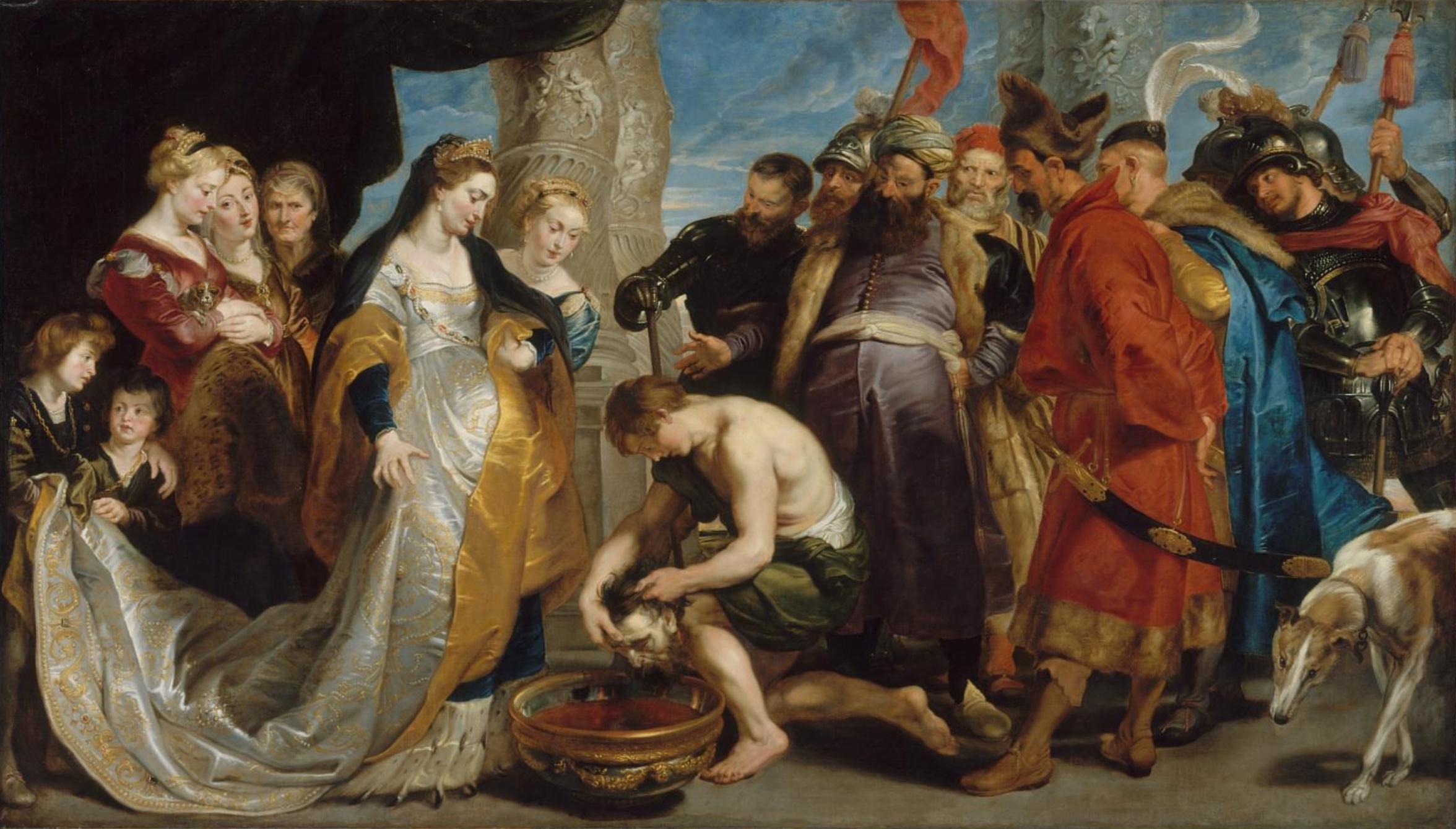
It is generally accepted that in fifth-century Athens, around the time of Herodotus, men and women had vastly differing expectations and social roles placed upon them, with women commonly being restricted to the oikos (household), expected to carry out any tasks that would aid in upholding its daily maintenance, while men “protected it” from external threats and represented it in “the greater political community”, leading many scholars to even liken the treatment of women at the time to that of slaves (Dewald, 1980, pp. 11–12). This is only exacerbated by the fact that women were excluded from politics, but even further excluded from society generally at the levels of “language, institutions, popular culture” and more (Pritchard, 2014, pp. 176–177).
Herodotus, however, was not Athenian himself and possibly brought a non-Athenian perspective to the issue of gender in his Histories (Tank, 2018, p. 76). While not quite feminist and still largely focused on men, Herodotus does not ignore women and goes out of his way to mention and highlight them at certain points, introducing us to the hard working women of Egypt, Amazonian warrior women and women married to gods in Babylonia to name a few (Singh, 2003, p. 1).
Herodotus in his Histories utilises many common elements of mythology such as genealogies, themes of hubris, religious miracles and other traditional story elements that his Greek audience would be familiar with in order to make his tales more accessible/engaging or to convey a certain message (Dewald, 2012, pp. 60–61). An example of this, though not specifically linked to myth, is how Herodotus inserts his own morals or world view, not uncommon for storytellers even subconsciously, by quite often linking monarchy and power with improper behaviour towards women (Osborne, 2004, p. 60). That said, let us look at a more specific example of how Herodotus utilises elements of myth to tell his tale and the tales of women.
We see in book 1 of Herodotus’ Histories the childhood of Cyrus, following the typical mythical elements of pre-existing folktales about the birth of a hero. The motif of a baby left to die in the wild as Cyrus almost was, usually to escape prophecies about the child eventually stealing power (in this case king Astyages had dreams believed to mean that Cyrus, not yet born, would steal the throne, leading the king to send him away with his courtier, Harpagus, to be killed) is common in such narratives, as is the child’s mystical survival through the intervention of an animal or a non royal, such as a shepherd. The child is then usually raised far away, ignorant of his origins. Cyrus in this case is given to a cowherd whose wife takes pity on him after losing her own child. The mythical babe then often returns to his birthplace by some great revelation, as in this tale, where Cyrus raised suspicion after displaying “regal behavior” towards the son of a noble and was summoned to Astyages’ palace where he discovered the truth. The child’s identity is then recognised, and he “regains his birthright as the legitimate heir to the throne” (Haussker, 2017, pp. 103–106).
The aforementioned wife in this tale conforms to the expected role of a mother and gentle woman, seeing the child, she “burst out crying, and put her arms round her husband’s knees, imploring him to do anything rather than expose it […]” (Hdt. 1.112), transgressing slightly by going against what the men around her had ordered but using her position as a grieving mother to invoke pity and save the child. She is intelligent, supplicating her husband in a way to appeal to his better nature, then suggesting trickery of sorts by swapping Cyrus with the body of her own dead baby so no one would suspect that the king’s orders were not fulfilled. A woman’s trickery is a common theme in mythology, and not always viewed negatively, like Penelope in book 2 of the Odyssey claiming she would not marry again until she finished weaving a shroud for her father-in-law, but unravelling it at night to save herself. This trickery is a way of attaining what is deemed right by the women but denied due to their position (due to circumstances briefly mentioned above), it would be more dangerous for them to be openly “disobedient” to the men and kings around them.
The woman in this tale is initially presented as slightly weak, having “feminine” traits of pity, she has to ask for permission from her husband, not directly acting on her desire to save Cyrus herself, but she is a mother. She is a mother in a primal sense, if we look at her outburst as instinct and desperation to save a child rather than a tantrum to get what she wants, she fights in her own way and shows herself to be strong enough to push back against what the men around her have ordered, and she eventually fulfils the traditional role of mother, as women would have been expected to, fully by raising Cyrus as her own. She utilises her intelligence to craft a trick her husband hadn’t even considered and succeeds against the odds.
Herodotus here seems to show that women can be incredibly intelligent, persuasive speakers (something more commonly associated with men in ancient Greece) as she eventually uses reason to convince her husband that they can save Cyrus and avoid punishment via trickery. Women, as shown here, can rise above the limits placed upon them by society by being crafty and playing the system for lack of better words – she uses traditionally feminine traits she is expected to possess in order to guilt her husband and gain what she wants, a way to save and have a child. But her trickery is not presented as devious, just a necessity.
Herodotus often gives the women in his Histories (mostly those with higher social standings) varying degrees of autonomy and power. Let us look at two such examples.
The story of Candaules’ wife in book 1, displayed naked at her husband’s command to his bodyguard, shows the cost of underestimating women and acting against nomoi (Dewald, 1980, pp. 14–15). Candaules goes against nomoi (laws, customs) disregarding the “customary virtue of female modesty […], violating the boundary between women and unrelated men” to secretly show off his wife, like an object he owns (Tank, 2018, p. 78). He assumes she will do nothing in retaliation, or even that she would never find out, because he can’t comprehend the possibility of a woman, let alone a wife, acting independently against her husband, but she does. She acts to preserve her own honour, using her authority as queen and ordering the same guard to kill the king or die himself, and he does not choose the latter (Dewald, 1980, p. 14). Herodotus does not present the violence orchestrated by a woman as any better or worse than that of a man, her actions are not “hysterical” nor any more unreasonable than anything a man would do, it is just a way to have her justified revenge and punish the disregard for nomoi (Dewald, 1980, pp. 14–15).
Tomyris was queen of the Massagetae, “Cyrus sent to her and pretended to sue for her hand in marriage; but […] was met with a refusal” (Hdt. 1.205) because she knew he only wanted the union for power, thus rejected him openly. Cyrus then changed tactic, planning to attack instead, and the queen (perhaps Herodotus was initially playing on the idea of women being traditionally less violent) tries to achieve peace before taking any violent action, while another king would likely have attacked before Cyrus had a chance to act on his threat. With this in mind however, one could argue that this scene may have been a way of presenting women as more level-headed, she may have taken into account the potential losses and elected to avoid unnecessary bloodshed, a very rational and wise decision, though this may be too progressive of a reading. Herodotus still presents Tomyris as intelligent, she sees the real intent behind the proposal and delivers an insightful warning and strong words of sound advice when threatened, just as men do at other points of the Histories, Solon’s warning to Croesus for example (Tank, 2018, p. 83). Tomyris’ warning is ignored however, because she is underestimated and deemed inferior, it would be “shameful” for a man to give ground to a woman. Interestingly, at this and later points mentioned below, the queen is shown to be almost morally superior, her words and advice are shown as being what should have been obeyed, despite the topics being more traditionally masculine (warfare and military matters). If Cyrus had obeyed, he would likely have survived.
Through pure lowly trickery rather than true masculine battle, Cyrus gains an upper hand, killing many and capturing Tomyris’ son (Tank, 2018, pp. 83–84). We then see the queen’s rage as a ruler and mother when she threatens Cyrus in return, saying “Glutton as you are for blood, you have no cause to be proud of this day’s work, which has no smack of soldierly courage. […] give me back my son and get out […] If you refuse, I swear […] to give you more blood than you can drink […]” (Hdt. 1.212–213), openly and angrily condemning Cyrus’ performance “not only as king and military leader, but […] as a man” (Tank, 2018, p. 84) yet her warning is ignored again, leading to Cyrus dying in battle.
Tomyris’ traditionally feminine motherly status is highlighted, with her son’s capture being what truly ignites her wrath, yet she subverts what is traditionally expected of a woman in other ways, for not only does she achieve military victory (a traditionally masculine pursuit) but when the battle is over, she fills a skin with blood and insults the dead Cyrus by pushing his head into the blood filled skin, demonstrating how comfortable she is with violence, vengeance and literal bloodshed, but this also makes her principled in some ways; she promised blood should Cyrus not heed her warning and it is blood that she gave him (Tank, 2018, p. 84). Herodotus does not harshly judge her for this act, showing her as a high-status woman and mother exercising military power, speaking very skilfully and in some ways paints her out to be “more like the normative male than Cyrus, who uses a trick, rather than military force, to oppose her,” (Tank, 2018, p. 84).
Women’s experiences are repeatedly presented by Herodotus as being interlinked with the desires of men and their presumed entitlement to women and their bodies (as with Candaules’ wife in book 1, for example). Another example of this would be the fact that Babylonian women once in their life were supposedly expected to sit in the temple of Aphrodite and have sex with a stranger, rich or poor, they have “no privilege of choice” yet the men can choose based on how appealing they find the women (Hdt. 1.199). Herodotus notes and explicitly disapproves of this practice, more than likely to present non-Greek customs as inferior, but he does not judge the women, never painting them as happy with this practice or their “use” by men and seemingly even sympathises with them (Georgiou, 2002, pp. 148–149).
Herodotus is not wholly accepting of all sexual customs, he presents various non-Greek customs as barbaric, foreign and an antithesis to the Greeks, by focusing on women (Georgiou, 2002, p. 153). With varying degrees of interest and disapproval, he notes how some societies “shared” women, sold their daughters, allowed their daughters sexual freedom until marriage and so forth, at times, “it seems that the mating customs represented in the Histories suggest excessive and uncontrollable wantonness among the peoples treated ethnographically” (Georgiou, 2002, p. 153). Herodotus seems to discuss things on a case by case basis essentially, not passing sweeping judgements and, when disapproving of practices involving women, it is not women specifically he looks down on but on perceived sexual promiscuity within non-Greek societies.
Women in the Histories are (as expected of a work primarily for Herodotus’ Athenian audience) mothers, gentle, used. They often have little choice in anything (marriage, sex, politics, daily life) and are second in focus and power to men. They act with the permission of men and are not often the “main focus”. Yet some are violent and vengeful, as with the two queens mentioned above, acting in swift retaliation to men’s disregard of nomoi and honour. They are caring, obedient in some cases of nomoi/customs, but often very protective mothers and strong speakers acting independently of any man as an individual themselves.
Herodotus uses mythological themes to show women in clear positions of power and passes little to no explicit judgement upon these women (no more or less than he judges the men), he shows their care and violence, showing that no one woman is the same and that they can have autonomy. He also uses women and their sexuality at points to highlight differences between Greeks and non-Greeks, being slightly judgemental of those who are too free but he is not always disgusted and seems to focus more on showing his Greek audience just how different some societies are than judging the women. He at points even has a tone of empathy when discussing those forced to prostitute themselves or act against their wishes (the Babylonian women for example). Herodotus seems to shift away from the explicit misogyny one comes to expect from this period of Greek writing, though he is not feminist by our standards, and seems to labour away to present a variety of views, individuals and practices, as he promises to do in the opening lines of his work. As beautifully stated by Tank (2018, p. 86), Herodotus “characterizes men and women in a nuanced and complex way, […] undermines the stereotype of the powerful woman who, […] wields power through trickery, or whose public interventions lead to disaster for the wider community. He shows men who do not live up to gender expectations, as well as women who defy those expectations” showing the complexity of gender, social expectations and individuality.
Bibliography
Dewald, C. (1980). Biology and Politics: Women in Herodotus’ ‘Histories’. Pacific Coast Philology, 15, pp. 11–15.
Dewald, C. (2012). Chapter 1: Myth and Legend in Herodotus’ First Book. In: Myth, Truth, and Narrative in Herodotus. Oxford University Press, pp. 60–61.
Georgiou, I.-E. (2002). Women in Herodotus’ Histories. PhD thesis, pp. 148–153.
Haussker, F. (2017). The Ekthesis of Cyrus the Great: A Case Study of Heroicity versus Bastardy in Classical Athens. The Cambridge Classical Journal, 63, pp. 103–106.
Herodotus (2003). The Histories. New ed. Translated by A. de Sélincourt. London: Penguin.
Osborne, R. (2004). Greek History. Routledge, p. 60.
Pritchard, D.M. (2014). The Position of Attic Women in Democratic Athens. Greece and Rome, 61(2), pp. 176–177.
Singh, A.K. (2003). Women in the World of Herodotus. Proceedings of the Indian History Congress, 64, p. 1.
Tank, H. (2018). Powerful Women and Gender Ideology in Herodotus’ Histories. In: Women and the Ideology of Political Exclusion. Routledge, pp. 76–86.

The author
Final year undergraduate focusing on archaeology and classical studies.
All work by this author →Read next, in Classics
- Blood and Fire: Troy in Heavy Metal Vlada Kampane
- Echidna & Typhaos: A Sinister Romance Sid Basu
- A Goddess of Love and War: Reconciling Ishtar and Venus Alec Grinter