

Literature · Essay · From the archive
The Illusion of Choice: A Reading of Larkin’s ‘Dockery and Son’
On time, habit, and the futility of the paths not taken.
Hector Hallett · University of York · 6 September 2026
University of York · 6 September 2026
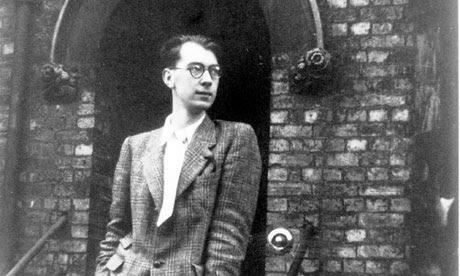
The following close reading is of Philip Larkin's 'Dockery and Son' (1964), reproduced below.
Dockery and Son by Philip Larkin
‘Dockery was junior to you,
Wasn’t he?’ said the Dean. ‘His son’s here now.’
Death-suited, visitant, I nod. ‘And do
You keep in touch with—’ Or remember how
Black-gowned, unbreakfasted, and still half-tight
We used to stand before that desk, to give
‘Our version’ of ‘these incidents last night’?
I try the door of where I used to live:
Locked. The lawn spreads dazzlingly wide.
A known bell chimes. I catch my train, ignored.
Canal and clouds and colleges subside
Slowly from view. But Dockery, good Lord,
Anyone up today must have been born
In ’43, when I was twenty-one.
If he was younger, did he get this son
At nineteen, twenty? Was he that withdrawn
High-collared public-schoolboy, sharing rooms
With Cartwright who was killed? Well, it just shows
How much ... How little ... Yawning, I suppose
I fell asleep, waking at the fumes
And furnace-glares of Sheffield, where I changed,
And ate an awful pie, and walked along
The platform to its end to see the ranged
Joining and parting lines reflect a strong
Unhindered moon. To have no son, no wife,
No house or land still seemed quite natural.
Only a numbness registered the shock
Of finding out how much had gone of life,
How widely from the others. Dockery, now:
Only nineteen, he must have taken stock
Of what he wanted, and been capable
Of ... No, that’s not the difference: rather, how
Convinced he was he should be added to!
Why did he think adding meant increase?
To me it was dilution. Where do these
Innate assumptions come from? Not from what
We think truest, or most want to do:
Those warp tight-shut, like doors. They’re more a style
Our lives bring with them: habit for a while,
Suddenly they harden into all we’ve got
And how we got it; looked back on, they rear
Like sand-clouds, thick and close, embodying
For Dockery a son, for me nothing,
Nothing with all a son’s harsh patronage.
Life is first boredom, then fear.
Whether or not we use it, it goes,
And leaves what something hidden from us chose,
And age, and then the only end of age.
Close reading:
In 'Dockery and Son', Philip Larkin intertwines themes of time, ageing, and mortality with his struggle with the illusion of choice through internal monologue on the isolation of life compared to habitual norms, spurred by the death of a former university mate. The poem possesses much of Larkin's traditional evaluation of his surroundings. The poem fits in with 'The Whitsun Weddings' collection due to a resigned and judgemental spectator's view on society. It's seven eight-line stanzas form a strict structure, yet this formal control contrasts Larkin's wandering thoughts, reflecting Larkin's characteristic balance between order and drift. The rhyme scheme, though irregular, retains a subdued pattern reinforcing the poem's reflective restraint. This quiet control of form parallels the emotional reserve that defines Larkin's voice throughout the collection.
Larkin opens with a conversational tone, 'Dockery was junior to you, / Wasn't he?' This rhetorical questioning initiates a comparison between generations, underscoring Larkin's meditation on time's passage and mortality. The short statement, 'His son's here now,' after Larkin made no reply, reinforces Larkin's detachment, as he reduces his input to a mere 'nod.' This sense of estrangement intensifies through description of himself as a 'death-suited, visitant'; the compound noun and archaic adjective evoke a distant self-image, whilst the asyndeton heightens the stark isolation of his reflection. Larkin continues to emphasise this starkness by layering adjectives evoking memories of early-morning fatigue, 'black-gowned, unbreakfasted, and still half-tight.' This repetition of routine reflects a nostalgia for the carefree days of youth, yet it also reveals the monotony he feels in ageing.
The near-regular iambic pentameter of these lines maintains a rhythm of habitual motion, echoing the weary pattern of daily existence. However, natural phrasing makes the rhythm sound conversational, aligning poetic form with internal dialogue. Throughout the poem, Larkin compresses time by using present tense, 'I catch my train, ignored.' The symbol, 'train,' evokes passage with transience. Motion becomes cyclical as Larkin employs polysyndeton and alliteration mimicking the train's ebbing motion, 'canal and clouds and colleges subside' with the adjective 'subside' implying time is slowly sinking away. The line drifts beyond its metrical boundary, mirroring Larkin's mind that cannot rest within fixed limits. This fluid use of enjambment typifies Larkin's craft throughout 'The Whitsun Weddings', where syntax mirrors the continuity of trains, journeys, and time itself, linking 'Dockery and Son' thematically with poems such as 'The Whitsun Weddings' and 'Here'.
Larkin continues to meditate on the idea of Dockery's son, 'Anyone up today must have been born / In '43, when I was twenty-one.' The arithmetic diction, ''43' and 'twenty-one,' compresses time into data, as Larkin seems to render ageing merely as a calculation, which creates a detached tone that reflects life's statistical passing. 'Only a numbness registered the shock / Of finding out how much had gone of life.' 'How much had gone of life' quantifies life as a finite resource spent without awareness, while the visceral reaction of 'numbness' with 'shock' reveals an emotional paralysis as Larkin meanders through life.
The last stanza of the poem epitomizes Larkin's struggle with the existential passing of time, 'Life is first boredom, then fear.' The aphoristic syntax mirrors the bleak certainty of ageing. 'Boredom' represents youth's inertia, and 'fear' indicates anticipation of death. He then goes on to say, 'Whether or not we use it, it goes.' The plain diction and enjambment force the line forward, mimicking the inevitability of the motion of time. 'And age, and then the only end of age.' The circular syntax enacts life's completion, as the repetition of 'age' compresses life and death into one final exhausted utterance. Larkin's tone is detached, marked by plain diction and emotional restraint; his voice feels numb, unnatural and analytical, mirroring the paralysis he describes. The flat, aphoristic phrasing at the end reinforces a bleak stoicism, presenting ageing as quiet inevitability rather than tragedy.
As the poem unfolds, Larkin shifts from contemplating time's transience to confronting the futility of human choice. 'I try the door of where I used to live: locked.' The colon's abrupt finality reinforces the closure of past possibility; the room is irretrievable and 'tight-shut.' Larkin implements futility through syntax, 'How much... How little... Yawning, I suppose / I fell asleep.' The ellipses represent incompletion, and the anticlimactic 'yawning' reduces all the possible philosophical pondering to mere tiredness, signalling a wasted thought.
Larkin questions whether he made right decisions by comparing them to those of Dockery's, 'Only nineteen, he must have taken stock / Of what he wanted, and been capable / Of ... No, that's not the difference.' The almost false start and then eventual self-correction dramatize Larkin's indecision; the syntax creates hesitation, and despite the benefit of hindsight, choice is now futile. Larkin ruminates whether to marry, have children, or to remain individual; he mocks Dockery's confidence, 'Convinced he was he should be added to!' The exclamatory irony of 'added to!' hints to Larkin's egotistical view that he sees family and emotional growth as mechanical and meaningless, similar to his reducing of life to statistics in 'adding meant increase.'
Larkin further compares 'increase' versus 'dilution' juxtaposing social optimism with existential futility. He questions in frustration, 'Where do these / innate assumptions come from?' or whether a higher force present, 'hidden from us,' chooses. The rhetorical questions signal the futility of introspection; Larkin recognises the trap turned 'habit' of inherited ideas but cannot transcend them. The use of harsh natural imagery of 'sand-clouds' personifies the habits as ossified, as life's choices 'harden' into our inevitability. The image of a sand cloud further exemplifies this image; humanity is blinded from retrospection. The syntax loosens as the poem progresses, with clauses flowing with each other via enjambment, reflecting the restless flow of Larkin's consciousness.
Dockery's legacy lives on through his son; this creates tension between continuity and isolation as Larkin interrogates whether legacy through children has value or if it is just a gesture against time's erosion. 'To have no son, no wife, / No house or land still seemed quite natural.' The tricolon of negation defines Larkin's self by absence of the traditional markers of identity, revealing a self-defined by isolation and absence. This tension between solitude and self-definition parallels 'Mr Bleaney', where the speaker inhabits a rented room, 'This was Mr Bleaney's room', mirrors the previous tenant's emptiness, suggesting that personal identity becomes transient, defined purely by the spaces and routines left behind.
The domestic imagery of 'house' and 'land' contrasts Dockery's legacy with Larkin's isolation. Larkin further emphasises the questioning of 'natural,' revealing it as an ironic self-deception. The poem is summed up in, 'For Dockery a son, for me nothing,' which creates the perfect antithesis of the contrast, while the monosyllables further his emptiness and detachment. Larkin's preoccupation with mortality is echoed in 'Nothing to be Said', where he broadens personal futility into collective inevitability. Whereas 'Dockery and Son' explores personal ageing and choice, 'Nothing to be Said' expands this decay to a universal plane through repetition of 'slow dying,' this parallels the erosion implicit in Dockery's decline. Larkin's gloomy imagery in 'mill-towns on dark mornings' and 'nomads among stones' evokes the industrial and the primitive, suggesting that progress and stagnation alike share the same end. The measured rhythm strips human activity of grandeur, as Larkin's concludes that continuity through family, 'a son', amounts to resistance against oblivion rather than escape.
The eventual imagery of bleak landscape and dire mood of 'Dockery and Son' are typical of Larkin's work, yet this poem moves beyond mere cynicism to a philosophical confrontation with time and futility. Stripped of Larkin's satire, it meditates on isolation and the inevitability of decay, ending in characteristic resignation as Larkin concedes, 'Life is first boredom, then fear.' Here, existence itself becomes cyclical and inescapable, capturing the poem's sombre acceptance of mortality.
Bibliography
Poem Source: Whitsun Weddings (Farrar Straus and Giroux, 2001)

The author
Founder and editor-in-chief of The Astyanax, which he started in 2026 to give emerging writers in the humanities a serious place to publish. He reads English at the University of York, where his interests are Modernism and its classical inheritance.
All work by this author →Read next, in Literature
- The Battle of Orphir: An Elegy Anthony J Kleem
- The Other Lion: Aslan, the Incarnation and "Us Lions" R.C. Horton
- Under His Eye: Surveillance, Religion, and Control in The Handmaid's Tale Evan Rogers