

Classics · Essay · The Weekly, No. 5
Making a Song and Dance of It: Performance and Early Greek Poetry
The difference it makes in our appreciation of early Greek poems to think of them as song lyrics rather than as words on a page.
Anwen Pinniger · University of Exeter · 5 September 2026
University of Exeter · 5 September 2026
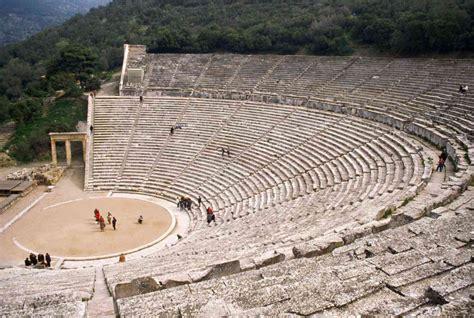
No Greek Lyric poem was written without the intention of performance. In the ‘song culture’ of Ancient Greece, public performance of music, singing, and dance brought the community together and was necessary for religious, social, and political events as well as family milestones like weddings. For every occasion, there was music. However, a collection of Greek lyric poetry read today alone in your head will not come close to replicating the envisaged atmosphere with all its religious fervour, colour, and performance. To think of the poems as song lyrics includes all that the singing would have entailed like music and dance as the original authors would have envisaged for their work. This broader experience of the poems as song lyrics compared to the written records of them today shows the enormous difference it makes to our appreciation of these poems when we think of them as more than words on a page. This can be examined in at least three differences. As well as obviously not physically being present at their original rendition, the difference can also be looked at through the absence of dance and musical accompaniment, as well as the difference in location in all meanings of the word. These methods of analysis allow us to better understand what exactly readers miss out on when looking at the Greek lyric poets.
However, the most glaring difference between song lyrics and words on a page is melody. Iamboi were recited, but elegy and melic were both sung out loud for an audience. Elegy had musical accompaniment, and melic was either sung by an individual or a chorus also with accompaniment. This music would have involved pipes, lyres, and harps played in different musical modes, comparable to modern keys or octaves, which made up the rest of the performance with the lyric poetry and potentially the dancing. Modern-day reconstructions of Ancient Greek music, like famously by Armand D’Angour, give the closest experience possible of a lyric poetry performance as would have been experienced by the Ancient Greeks and is much more immersive than private reading. Lasus’ fragment even declares his poem to be “in the low-booming Aeolian mode,” an in-joke based on the notes being played which is completely lost on the passive reader. The musical accompaniment is integral to the performance and creates a huge difference from words on a page, through the atmosphere created and the potential for multiple musicians involved in a performance. This would have been central to a performance of elegy or melic poetry. However, even in the recited iamboi there was music, thanks to the melodious nature of the Greek language. Klavan argues that because of lilting pronunciation and the extensive use of accents and emphasis common in Greek speech, even everyday conversation would be more musical than you would expect, even if not sung specifically. This is totally lost when reading the poems as words on a page. Furthermore, Klavan argues that this means melodies could have followed the pitch and tone of the words themselves. This would mean love poems with romantic words, would give it a romantic tune to Greek ears, over many years of associating the same words with the same tune. The same would go for a mournful lament, or a rousing victory song. Moreover, this creates opportunities for nuanced performances, like giving a celebratory lyric poem a sad melody to surprise the audience and give a pensive quality, adding layers of feeling for a complex emotional performance. This is not even accounting for personal touches by individual chorus leaders, musicians, and bards like emphasising specific words, changes in volume, and of course dance. One such dance is the kyklios choros or circular dance form of dithyramb, normally performed for Dionysus. Bacchylides’ 18 is a conversation between Aegeus, the king of Athens, and a chorus of Athenians, all worried about the mysterious vigilante slaughtering criminals on the road from their home to Epidaurus. This conversational style reads as flat and static as words on a page, but when performed would have been a dynamic call-and-response song between one dancer playing Aegeus, maybe the chorus leader, and the rest of the chorus playing the crowd of Athenians. The tense and anticipatory atmosphere created would have been layered with dramatic irony, since the audience would be well aware this vigilante was Theseus, which is revealed later in the myth. This song is therefore a snapshot of one of the tales of this Greek hero but influenced by the concurrent genre of tragedy plays being utilised in this traditional poetic form. It is therefore easy to imagine the circular dance being choreographed to help emphasise Aegeus’ worries through a swirling movement, or to emphasise the crowd’s constant questions through direction and speed. Although we have no choreographical evidence, dancers must have been intended to form a complete performance along with music and the lyric poetry. Reading these poems written down therefore loses the melodic quality of spoken Greek, the atmosphere of performed music, and the visual art of dance, making a stark difference to the overall effect that the original authors would have visualised and intended for their work.
Moreover, reading early Greek poems as words on a page instead of song lyrics loses the performance context for the poems. This could mean performance at a symposium of intimate friends, at a religious festival, an athletic competition, a family event, or on commission to celebrate any number of things. Poetry composed for a specific occasion would draw attention to its performance context to anchor it. This would include honoured guests, the type of audience, and the reason for celebration. It is in this way that this lyric poetry would have a more potent effect as a song rather than words on a page since it would have been composed to be read out to an audience and perhaps even for that specific audience on that specific day or occasion. Pindar, who was known to work for commission, skilfully used local mythological stories and figures like the Aikidai for Aiginetan victors in his epinicion so that his poems had a stronger effect on their localised audience. This shows the adaptation of poetry for a specific polis audience, which Anacreon also did in terms of audience form. The audience of the symposium was much more intimate than that of the public sphere in a festival or competition. In this poem, the speaker calls “come, boy, bring us a bowl,” showing this was likely performed at a symposium, where he also mentions disdain for ‘din and uproar’ like how Scythians drink (line 356b), and compares this to the “holy…city of men bold-hearted (lines 348 and 353)” with which a figure called Megistes is associated. The patriotic and flattering tone of the poem reflects the context of the symposium, clearly of leading figures including maybe Megistes himself. Additionally, the discussion of a rich and powerful lifestyle like “sweet sesame cake,” “ten ladlefuls of water, five of wine,” and the “flock” which one of the guests commands shows how the poem was written for an elite audience. This can be compared to the more varied and therefore unspecific audience of the public performance poems, which therefore do not espouse such traditional values and celebrate declarations of wealth and status. The intimacy of the party is lost when reading, as well as the effect of the personal naming of guests, who would have all been known to each other or even friends. Apostrophes to present guests were also included like in Hesiod’s ‘Works and Days.’ The audience at a lyric poetry performance could have included the lowliest slaves at the fringes, the poor, the workers, the local landowners, all the way up to the basic aristocracy which had developed by this time, so was a multi-faceted audience with a wide range of perspectives. Hesiod caters to this in lines 236-266 when describing consequences for bad behaviour by saying “You too, my lords, attend to this justice-doing of yours.” In this line he is directly speaking to the landowners and upper-class men, picking them out of the crowd to personally advise them to behave well. This effect of brazen, tongue-in-cheek checking of authority can be seen in reading the poetry but would be so much more effective if sung in front of the intended audience, with the intended members picked out in the intended way. In reading, the mischievous tone is lost to a large extent. Finally, with the adaptation of poems to specific peoples and places like Pindar, and the apostrophe of Hesiod, this could also have been copied by others as “self-contained fictions.” Budelmann and Phillips argue that poems performed again and again by other bards in other places could have retained the names and places in the poems, and the occasion of the first performance would be recreated so the new bard ‘plays’ the original poet, who may have been speaking through a fictional voice anyhow, and the new audience ‘plays’ the old one. In this way, the audience and bard are both acting, creating an immersive atmosphere where all are involved in the performance through a “vertical layering” of voices. This is another facet of performance context which is lost when reading words on a page, the interaction with location difference both temporal and geographical, as well as the participation in the performance by the individual versus the collective. This creates a huge difference in our appreciation of early Greek poems.
Fundamentally, the main reason why there is such a difference in our appreciation of early Greek poems when they are imagined as song lyrics (and all the performance that would entail) instead of words on a page is because these poems were written to be performed. The absence of music leaves half the performance that the poets would have imagined lacking, and even the suggestion of music through melodic spoken Greek is missing. The rest of the performance, including audience participation and dancing is absent too, leaving only the bare bones of lyric poetry. In this way reading words on a page makes a huge difference since it is not close at all to how they were written to be experienced and might not have even been recognised as the same sort of experience by the Ancient Greek poetry enjoyer. Therefore, imagining early Greek poems as song lyrics is essential in perceiving them in the way they were meant, and to enjoy them wholly.
Bibliography
PRIMARY SOURCES:
Anacreon. Greek Lyric Poetry. Translated by M. L. West. Oxford World's Classics. Oxford: Oxford University Press, 1993.
Bacchylides. Greek Lyric, Volume IV. Translated by David A. Campbell. Loeb Classical Library. Harvard: Harvard University Press, 1992.
Hesiod. Theogony & Works and Days. Translated by M. L. West. Oxford World's Classics. Oxford: Oxford University Press, 2008.
Lasus. Greek Lyric Poetry. Translated by M. L. West. Oxford World's Classics. Oxford: Oxford University Press, 1993.
Sappho. Greek Lyric Poetry. Translated by M. L. West. Oxford World's Classics. Oxford: Oxford University Press, 1993.
Stesichorus. Greek Lyric Poetry. Translated by M. L. West. Oxford World's Classics. Oxford: Oxford University Press, 1993.
SECONDARY SOURCES:
Budelmann, Felix and Phillips, Tom. "Introduction" in Textual Events: Performance and the Lyric in Early Greece. Oxford: Oxford University Press, 2018. https://doi.org/10.1093/oso/9780198805823.003.0001.
Carey, Chris. "Genre, occasion and performance." In The Cambridge Companion to Greek Lyric, edited by Felix Budelmann. Cambridge: Cambridge University Press, 2009.
D'Angour, Armaund. "Ancient Greek Music: now we really know what it sounded like." Accessed March 19, 2026. https://theconversation.com/ancient-greek-music-now-we-finally-know-what-it-sounded-like-99895.
Klavan, Spencer. Music in Ancient Greece: Melody, Rhythm, and Life. London: Bloomsbury Publishing, 2021. https://books.google.co.uk/books?id=O6ALEAAAQBAJ&pg=PR3&dq=music+in+ancient+greece:+melody+rhythm+and+life&lr=&source=gbs_selected_pages&cad=1#v=onepage&q=music%20in%20ancient%20greece%3A%20melody%20rhythm%20and%20life&f=false , Google Books.
Kurke, Leslie. "The Strangeness of 'Song Culture': Ancient Greek Poetry." in Literature in the Greek World. Oxford: Oxford University Press, 2001. https://doi.org/10.1093/oso/9780192893031.001.0001 .

The author
BA Ancient and Modern History student and incoming masters student studying museums, curation, and collections management, conservatorship, and object handling. Interested in classical reception, art history and material culture.
All work by this author →Read next, in Classics