

Literature · Essay · From the archive
Constructing Criminal Agency: Narratives, Identity, and Violence in Macbeth and Othello
Lola Hobson · University of Nottingham · 7 September 2026
University of Nottingham · 7 September 2026
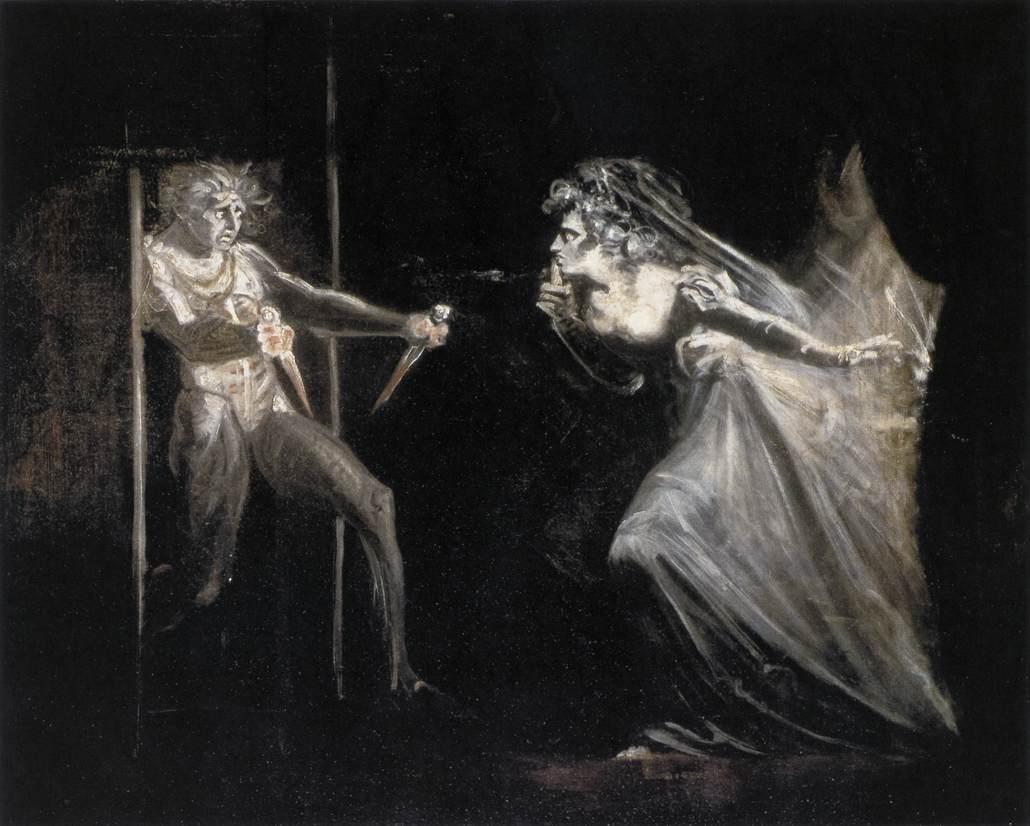
Acts of extreme violence are often staged as the inevitable result of persuasion and psychological rehearsal in Shakespearean tragedy. In Macbeth and Othello, murder lies at the centre of the drama, but it is vital to remember that these acts of violence are not seen on stage, but the audience sees the inevitable violence building up through anticipation, persuasion, and psychological preparation for violence. The plays are interested in how someone becomes capable of committing murder, and the process of committing murder. Exploring the plays through a forensic lens similar to a modern true-crime analysis allows attention to be given to motive, testimony, and manipulation. Soliloquies function as confessions, manipulators become architects of crime, and symbolic objects like Macbeth’s daggers or Desdemona’s handkerchief function as forms of evidence. Through these devices, Macbeth and Othello illustrate how interpretation, persuasion, and performative identity help produce violence and shape criminal agency. While Macbeth shows a dramatisation of political murder that is influenced by prophecy and ambition, Othello portrays an intimate homicide that is driven by racialised insecurity, jealously, and manipulation. This essay explores how the two plays reveal violence as not inherent evil, but as a product of narrative control.
In Macbeth, the central offence is regicide: the murder of King Duncan. Within the wider political sphere of Shakespeare’s time, regicide is the biggest crime one could commit as kings ‘sit upon GOD his Throne in the earth and have the count of their administration to give unto him’[1]. The King was thought to rule through divine authority, believing they were God’s messenger on Earth. Therefore, Duncan’s murder is an assault on both, the political hierarchy and divine order as Macbeth interrupts societal order. Macbeth’s later crimes extend this offence in a broader conspiracy that results in the deaths of Banquo and Macduff’s family. Shakespeare structures Macbeth’s path towards regicide by using thought as evidence. Before he murders Duncan, Macbeth’s imagination reveals how the mind can become the first crime scene.
After hearing the Witches’ prophecy that he ‘shalt be king hereafter’[2], Macbeth confronts the possibility of murdering Duncan by asking ‘if good, why do I yield to that suggestion/whose horrid image doth unfix my hair’ (1.3.33-34.). The language suggests that violence is born into existence as a mental vision as opposed to physical deed. His imagination produces the image before any concrete plan is formed. This quote functions like psychological evidence, Macbeth has an internal conflict between his ambitions and moral awareness. He is struggling between good and evil. Macbeth is aware of the horror of his imagination but is equally as fascinated by it.
Attention should be drawn to the suspect’s dagger soliloquy. Macbeth starts his soliloquy with ‘is this a dagger which I see before me?’ (2.2.32). This is a key part in Macbeth’s case. He hallucinates a weapon that becomes a symbolic piece of evidence that guides his decision to murder Duncan. This soliloquy shows the transition from imagination to action. His mind creates this vision that demand fulfilment. Upon analysis, the hallucination exposes the evil intent Macbeth has as well as his guilt. He is aware of the immorality of the murder, but he feels drawn towards it at the same time. By imagining himself as king, Macbeth constructs a future identity for himself and then takes it upon himself to make it a reality.
While Macbeth’s internal conflict serves a key part in his crimes, Shakespeare uses external persuasion through the character of Lady Macbeth. Lady Macbeth functions as the architect of crime through conspiracy and manipulation, therefore making her a key suspect in her husband’s crime. When Macbeth hesitates about killing Duncan, she manipulates him using rhetorical attacks on his masculinity. She tells him, ‘When thou durst do it, then you were a man’ (1.7.49). Lady Macbeth mocks her husband’s masculinity, reframing the idea of murder as a test of masculinity. She villainises her husband because he is hesitant to give her what she wants. She suggests that not committing the murder would make him weak, this destabilises Macbeth’s identity and she pressures him into conducting the murder. Her strategy shows how language can become a tool of criminal persuasion.
Through a closer analysis of Lady Macbeth, it is clear that her authority depends on her rejection on gender roles. She calls upon the spirits, demanding that they ‘unsex me here’ (1.5.40). Lady Macbeth ‘does not ask to be more masculine as she asks to be less feminine […] crime degenders women, and women de-gender themselves to commit crime’[3]. She wants to pursue power and prepare for a high-stakes job. This illustrates the idea that identity is performed. Butler writes, ‘gender is in no way a stable identity or agency […] an identity is instituted through a stylized repetition of acts’[4]. Lady Macbeth embodies this idea by consciously performing a genderless role associated with violence and strategy. Ribner argues another angle, saying ‘her femininity comes through in her inability to kill the king’[5]. This juxtaposes her femininity with the unnaturalness of dominance in a woman. Her authority over Macbeth is dependent on sustaining this performance. Once this fails, her power fails too. In rejecting gender, Lady Macbeth rejects conventionality. This is vital to Macbeth’s criminal case as she acts through her husband to get what she wants but impacts his criminal agency as she sets him up to begin.
Macbeth’s crime illustrates the importance of evidence and the manipulation of the crime scene in Macbeth. Macbeth returns from Duncan’s chamber ‘with two bloody daggers’ (2.2.56). Macbeth’s failure to leave the weapons with the guards exposes his panic and instability. Macbeth still feels guilt despite his evil intentions. Upon the revelation of Macbeth’s mistake, Lady Macbeth immediately says, ‘give me the daggers’ (2.2.56) so that she can correct the mistake. She admits to having ‘drugged their [the guards’] possets’ (2.2.5-6) in order to ensure her plot works and that the guards cannot testify against her or her husband. This illustrates a poorly executed attempt at staging a crime scene and framing the guards. Macbeth not leaving the knives at the crime scene as intended suggests emotional turmoil and not calculated planning. Lady Macbeth’s intervention creates a hierarchy between conspirators; she assumes responsibility for correcting the evidence which reminds the audience that she is the architect of crime.
In addition to the manipulation, Macbeth undergoes a change from being a reluctant participant to an autonomous criminal. Before Duncan’s murder, he needs persuading by his wife, but he the escalates his crime and organises violence independently. Macbeth’s decision to kill Banquo was a conscious choice and marks a turning point in Macbeth. He does not consult his wife but instead hires murderers to conduct his plan, he declares that ‘it is concluded. Banquo, thy soul’s flight’ (3.1.140). This demonstrates how Macbeth’s criminal identity becomes stabilised through a repetition of acts. Once Macbeth commits regicide, the highest crime, violence then becomes easier to justify.
Moreover, Macbeth continues to escalate his criminal agency by slaughtering Macduff’s family. In contrast to Duncan’s murder which was targeted, the killing of Macduff’s family is indiscriminate: the murder of the children shows that Macbeth has become a tyrant whose political authority relies on continued violence. Forensically, he tries to eliminate witnesses and rivals who threaten his power. Every act of violence that Macbeth commits leads to another, creating a cycle of violence where murder becomes the primary method for Macbeth to maintain his control.
After a thorough analysis of Macbeth, it is clear that he internalises violence as governance. The murders expose a paranoia in which Macbeth drives his agency; he commits pre-emptive violence against imagined threats which turns ambition into systematic violence. Macbeth’s targeting Macduff’s innocent family reflects his ethical disintegration and his willingness to weaponise cruelty. Overall, Macbeth exercises complete criminal agency as he is ‘exceedingly ambitious’[6] and chooses violence which reveal a strong personal culpability.
In contrast to the political violence of Macbeth, Othello examines domestic homicide within an intimate setting. Othello’s primary crime is the murder of his wife, Desdemona. His secondary offences include the attempted murder of Iago, and an obstruction of truth. In Othello, the murder of Desdemona takes place in their bedroom, a private setting. Differently to Macbeth’s regicide, Othello’s crime takes place in a space that is associated with marriage and trust. The intimate setting intensifies the psychological dimension of the crime.
To begin with, Othello is a character that has a vulnerability to him. He is positioned as on outsider in Venetian society due to his race. Although Othello holds military authority, he is acutely conscious of his differences with those around him. Early in act one, Othello says, ‘Rude I am in my speech/And little bless’d with the soft phrase of peace’[7]. Othello implies that he is not as refined at the Venetians, but his speech proves otherwise. The statement exposes his insecurity rather than the truth. Othello does not believe he fully fits in with the social world in which he lives, this anxiety later makes him susceptible to manipulation.
Just as Lady Macbeth manipulated Macbeth, Iago manipulates Othello in this play. Iago is the architect of crime and is an epistemic manipulator. Differently to Othello and Macbeth, Iago rarely commits violence directly. He instead engineers circumstances that cause others to commit violence. A.C Bradley said ‘the skill of Iago was extraordinary, but so was his good fortune’[8]. Iago’s soliloquy says, ‘I am not what I am’ (1.1.65). This exposes him as a deceptive man, and not the honest man the rest of the characters think he is. The statement contradicts God’s ‘I am who I am’[9]. This transforms a divine declaration of truth into a confession of sin and falsehood. Through the contradiction, Iago positions himself as a person who can control knowledge and perception.
Similarly to Lady Macbeth, Iago uses his power to manipulate how evidence is perceived. The primary piece of evidence that Iago fabricates is the handkerchief that Othello gave to Desdemona. Iago cleverly plots for the handkerchief to fall into the hands of Cassio, therefore transforming the handkerchief into proof that Desdemona has been unfaithful. Othello asks for ‘ocular proof’ (3.3.361). Othello needs to see it to believe it. Othello’s desire for proof leads to the failure of Iago. The handkerchief is a fabricated clue: Iago has no actual proof that Desdemona is being unfaithful to Othello other than the handkerchief and so therefore the handkerchief is symbolic of falseness. Iago’s manipulation of evidence illustrates how interpretation can become more powerful than fact. Offenders often rely on symbolic objects, such as the handkerchief, to justify violence. The symbolism of the handkerchief convinces Othello that Desdemona has been unfaithful. Iago relies on suggestion and not actual accusation; by asking questions and giving partial information, he gaslights Othello into creating the narrative himself. Therefore, the victim becomes psychologically complicit in the crime that is yet to occur.
In Othello, Desdemona’s innocence heightens the tragedy of the closing act. Desdemona is the loyal and obedient. She is ‘helpless because her nature is infinitely sweet and her love absolute’[10]. These qualities should protect her in marriage, but in reality, they make her vulnerable. Othello frames her murder as a moral necessity. He states, ‘yet she must die, else she’ll betray more men’ (5.2.6). The quote suggests that Othello sees himself as the bringer of justice as opposed to a jealous, insecure husband. It appears that Othello is protecting other men from getting cheated on by murdering Desdemona, but in reality, he is protecting his own reputation from being destroyed by an unfaithful wife. By presenting the act of murder as a punishment for an imagined infidelity, Othello justifies homicide into moral rationalisation. The bedroom therefore becomes a private courtroom where Othello is the judge, jury, and executioner. Othello’s ‘verdict is that of the emotional man who judges as he feels’[11], Iago’s revenge is successful as Othello’s strong feelings end in murder. The stage directions say Othello ‘smothers her’ (5.2.85). Unlike Macbeth’s conspiratorial violence, this is personal. The crime happening within the marriage bed turns a symbol of love into execution.
Furthermore, the truth emerges as a delayed confession from Emilia who exposes Iago’s manipulation. By revealing the handkerchief plot, she reveals the truth about the narrative that led Othello to murder. Had Emilia revealed the truth sooner, the tragedy may have been prevented. Othello’s response to this revelation is a recognition of guilt. Othello turns the judgement upon himself. By committing suicide next to the body of Desdemona, he acknowledges his crime and tries to restore moral order. Ultimately, Othello retains partial agency, although manipulated, his final act accepts responsibility for his crime.
The tragedies portray similarities and differences in how criminal agency is constructed. In Macbeth, violence is a means of securing political power. Macbeth imagines his future and chooses murder to gain it. In Othello, violence arises to prevent the humiliation of an unfaithful wife. Both protagonists interpret murder as a solution to perceived threat. Both plays feature powerful manipulators who influence their decisions. Lady Macbeth and Iago function as persuasive figures who reshape the protagonist’s understanding of reality. However, Lady Macbeth relies on direct confrontation, but Iago plants doubts that slowly change Othello’s interpretation of events. Iago is arguably a stronger manipulator than Lady Macbeth as he is more subtle in his control.
Gender and performance are crucial in both tragedies. Lady Macbeth consciously rejects gender in order to pursue power by rejecting the emotions expected of women. Meanwhile, Othello performs judicial authority in condemning Desdemona. In the bedroom, he adopts legal language to present murder as a lawful execution. Butler’s theory of performative identity explains these dynamics: characters enact roles that shape their actions, and this influences how they justify violence.
Ultimately, the plays differ in the scale of crime. Macbeth occurs within the public sphere, escalating from regicide to tyranny, impacting the entire kingdom. In contrast, Othello thinks about more intimate crime. The climax of violence is a single catastrophic event which destroys a marriage. Both tragedies expose how narratives constructed by characters themselves lead to dangerous and irreversible consequences. Overall, Macbeth and Othello function as dramatic cases studies of how violence becomes possible. Shakespeare’s two tragedies resemble forensic analyses of criminal behaviour, showing the merging of persuasion, evidence, and identity. Macbeth’s imagination turns prophecy into justification for murder, while Othello’s need for proof allows him to easily be manipulated. In both plays, the protagonists construct narratives that legitimise violence. They challenge the idea that evil is inherent, suggesting that it is formed through interpretation and persuasion and the performances that shape human nature. Therefore, to conclude, criminal agency arises from character’s choices to act upon these; Othello is driven to his crimes so is only partially autonomous, whereas Macbeth takes full agency. Autonomous or not, violence is hauntingly inevitable in both Macbeth and Othello.
[1] King James VI and I, ‘The Trew Law of Free Monarchies’, in Johann P. Sommerville, ed. King James VI and I: Political Writings (Cambridge University press, 2012), p.64, https://www.cambridge.org/core/books/king-james-vi-and-i-political-writings/trew-law-of-free-monarchies/6BF526BB60CD3D59C732BF6DB2138D3A [accessed 16th March 2026].
[2] William Shakespeare, Macbeth, Cambridge School Shakespeare (Cambridge University Press, 2014. (1.3.48) All further refences will be given in essay body.
[3] Jeffrey R. Wilson, ‘Macbeth and Criminology’, in College Literature, 46.2 (Johns Hopkins University Press, 2019) p.458, https://muse.jhu.edu/pub/1/article/724092/pdf [accessed 14 March 2026].
[4] Judith Butler, ‘Performative Acts and Gender Constitution: An Essay in Phenomenology and Feminist Theory’, in Theatre Journal, 40.4 (The Johns Hopkins University Press, 1988). https://www.jstor.org/stable/3207893?origin=JSTOR-pdf&seq=1 [accessed 04 November 2025]. P.519
[5] Irving Ribner, ‘Macbeth: The Pattern of Idea and Action’, in Shakespeare Quarterly, 10.2 (1959), p.154, https://www.jstor.org/stable/2866920 [accessed 19 March 2026]
[6] A.C. Bradley, ‘Lecture IX: Macbeth’, in Shakesperean Tragedy: Fourth Edition by A.C Bradley (Palgrave Macmillan, 2007), p.267
[7] William Shakespeare, Othello (Oxford University Press, 2009), 1.3.81-82. All other references will be given in essay body.
[8] Ibid Bradley, p.135
[9] Exodus 3.14, https://bible.usccb.org/bible/exodus/3 [accessed 8th March 2026].
[10] Ibid Bradley, p.133.
[11] John C. McCloskey, ‘The Motivation of Iago’, in College English, 3.1 (1941), p.27 https://www.jstor.org/stable/371329?seq=3 [accessed 18 March 2026].
Bibliography
Primary:
Shakespeare, William, Macbeth, Cambridge School Shakespeare (Cambridge University Press, 2014.)
Shakespeare, William, Othello, (Oxford University Press, 2009)
Secondary:
Adams, Maurianne S., ‘“Ocular Proof” in Othello and Its Source’, in PMLA 79.3 (1969), pp.234-241, https://www.jstor.org/stable/461024 [accessed 16 March 2026]
Bradley, A.C., Shakesperean Tragedy: Fourth Edition (Palgrave Macmillan, 2007), pp.1-26, 130-181, 252-307.
Butler, Judith, ‘Performative Acts and Gender Constitution: An Essay in Phenomenology and Feminist Theory’, in Theatre Journal 40.4 (1988), pp.519-531, https://www.jstor.org/stable/3207893 [accessed 4 November 2025].
Cefalu, Paul, ‘The Burdens of Mind Reading in Shakespeare’s “Othello”: A Cognitive and Psychanalytic Approach to Iago’s Theory of Mind’, in Shakespeare Quarterly 64.3 (2019), pp.265-294, https://www.jstor.org/stable/24778472 [accessed 19 March 2026].
Curran, Kevin, ‘Feeling Criminal in Macbeth’, in Criticism 54.3 (Wayne State University Press, 2012), pp.391-401, https://muse.jhu.edu/article/484592 [accessed 11 March 2026].
Draper, John W., ‘Honest Iago’, in PMLA 46.3 (1931), pp.724-737, https://www.jstor.org/stable/457857 [accessed 19 March 2026]
Exodus 3.14, https://bible.usccb.org/bible/exodus/3 [accessed 8 March 2026].
Greenblatt, Stephen, Will in the World (Pimlico, 2005).
James VI and I, King, ‘The Trew Law of Free Monarchies’, in Sommerville, Johann P., ed. King James VI and I: Political Writings (Cambridge University press, 2012), https://www.cambridge.org/core/books/king-james-vi-and-i-political-writings/trew-law-of-free-monarchies/6BF526BB60CD3D59C732BF6DB2138D3A [accessed 16th March 2026], pp.62-84
Khalid, Aamna, ‘Gender Performativity: Femininity, Power, and Female Intelligibility in Macbeth and Othello’, in Contemporary Journal of Social Science Review 3.4 (2025), pp.566-573, https://contemporaryjournal.com/index.php/14/article/view/1675/1447 [accessed 19 March 2026].
McCloskey, John C., ‘The Motivation of Iago’, in College English 3.1 (1941), https://www.jstor.org/stable/371329 [accessed 11 March 2026].
Muslin, Hyman L., ‘Macbeth: The Self of Evil’, in Psychoanalytic Psychology 5.4 1988), pp.357-368, https://psycnet.apa.org/record/2003-05478-004 [accessed 16 February 2026].
Neill, Michael, ‘Unproper Beds: Race, Adultery, and the Hideous in Othello’, Shakespeare Quarterly 40.4 (1989), pp.383-412, https://www.jstor.org/stable/2870608 [accessed 19 March 2026].
Paris, Bernard J., ‘Iago’s Motives: a Horneyan Analysis’, in Revue Belge de Philiogie et d’Historie 62.3 (1984), pp.504-520, https://www.persee.fr/doc/rbph_0035-0818_1984_num_62_3_3475 [accessed 19 March 2026].
Shahiwala, Sofiya, ‘Power Beyond Sex: A Foucauldian Reading of Lady Macbeth’, in International Journal of English Literature and Social Sciences (Al Publications, 2020), pp.83-87, https://www.academia.edu/90473420/Power_Beyond_Sex_A_Foucauldian_Reading_of_Lady_Macbeth?source=swp_share [accessed 16 March 2026].
Ribner, Irving, ‘Macbeth: The Pattern of Idea and Action’, in Shakespeare Quarterly 10.2 (1959), pp.147-159, https://www.jstor.org/stable/2866920 [accessed 19 March 2026].
Roy, Armit, ‘Ambitions and Its Consequences: A Study of Macbeth’, in International Journal of Language, Literature and Culture 5.3 (2025), https://media.neliti.com/media/publications/617971-ambition-and-its-consequences-a-study-of-68501837.pdf [accessed 16 March 2026].
Wilson, Jeffrey R., ‘Macbeth and Criminology’, in College Literature (Johns Hopkins University Press, 2019, pp.453-485, https://muse.jhu.edu/pub/1/article/724092/pdf [14 March 2026].

The author
Lola Hobson is a poet, and an English Literature graduate from the North of Wales. Her undergraduate dissertation studied the marriage market in Austen novels, and analysed how economics and inheritance laws impacted agency in marriage. Hobson is studying her MA in English as of current. Hobson's debut poetry pamphlet, Terms and Conditions, was published in early 2026.
All work by this author →Read next, in Literature
- The Battle of Orphir: An Elegy Anthony J Kleem
- The Other Lion: Aslan, the Incarnation and "Us Lions" R.C. Horton
- Under His Eye: Surveillance, Religion, and Control in The Handmaid's Tale Evan Rogers