

Politics · Essay · The Weekly, No. 16
Carbon Copies: What British and Australian Politicians Can Learn from Each Other
Britain and Australia share a culture and, increasingly, a cast of political characters. That makes each country a testing ground for the other.
Dillon Kavanagh · University of Bristol · 18 November 2026
University of Bristol · 18 November 2026
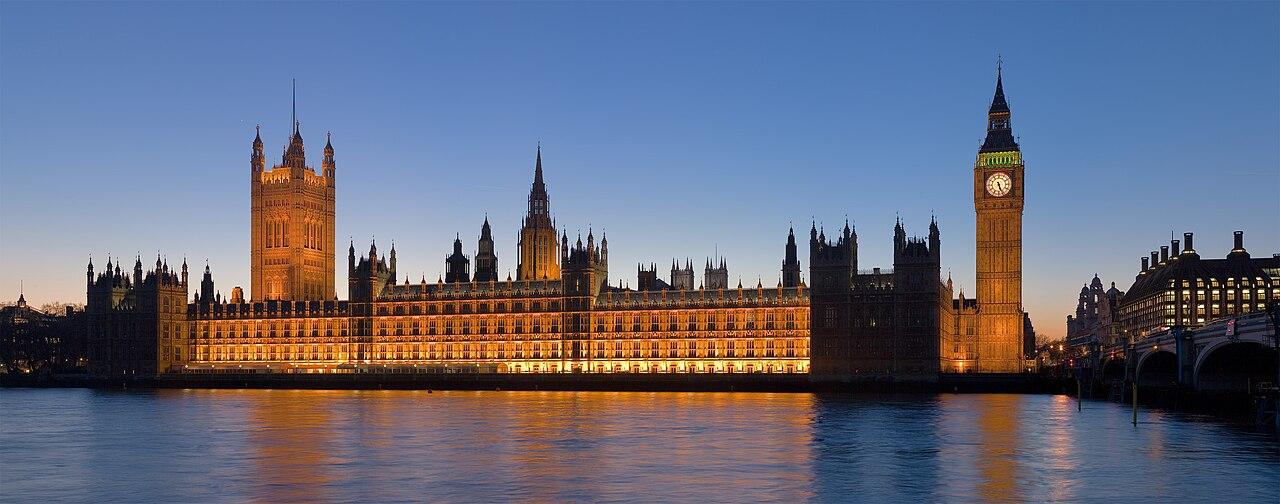
Britain and Australia are not so different. Apart from the weather, the likeness shows in the flags, the food, and a shared culture and sovereign. Their political systems are set up quite differently, yet the politicians who run them are near carbon copies. The reason is that the two cultures produce similar electorates, and similar electorates reward similar politicians. This has a practical use. Because the countries are so alike, the leaders of each can treat the other as a testing ground and watch what succeeds or fails there before trying it at home.
Andy Burnham and Anthony Albanese
Both men are centre-left Prime Ministers. Burnham has built a reputation on a relatable personality and is often called simply “Andy”. Albanese is known just as affectionately as “Albo”. Both have cultivated a working-class persona to appeal to their traditional voters, and it has worked.
On policy, Burnham has promised reform of the social care system and “good growth in every postcode”. Albanese has expanded Medicare and is making childcare and GP appointments easier to obtain in disadvantaged areas. Both trust the welfare state and believe that expanding it is the best way to lift communities that have been left behind, whether those are ex-industrial towns in the north of England or rural working-class towns in Australia.
So far the approach is paying off, at least in support. Albanese has won two elections and is firmly in control. Burnham has lifted Labour in the polls, though whether this is more than a honeymoon remains to be seen. The pattern suggests that proper investment in disadvantaged working-class communities can win elections.
Albanese’s record also suggests that Burnham should commit to his own convictions. He will be tempted to keep the Starmerites who delivered the 2024 majority, to take back ground from the Greens, and to win back Reform voters all at once. Trying to do all three risks fracturing the party and leaving it incoherent. Albanese has shown that a leader with a consistent position can build trust with the electorate and win, sometimes by a large margin.
Kemi Badenoch and Angus Taylor
These two opposition leaders have each been handed a rebuild that looks close to impossible, Badenoch since 2024 and Taylor since 2026. Both come from the right of their centre-right parties and oppose the economic interventions of Labour governments. Badenoch took over a party that had suffered a humiliating defeat at the 2024 general election, and it has taken two years for her rebuild to show promise in the polls. Taylor seems to be planning a long rebuild of the Liberal–National Coalition too.
The two echo each other on welfare, but the closest resemblance is on immigration. Taylor has stressed that immigrants should share Australia’s values and fit its culture. Badenoch favours the same “culture, not numbers” approach. Their lines are almost identical. Taylor has insisted that his party is not becoming “One Nation lite” (ABC, 2026), much as Badenoch ruled out a pact with Reform UK at the Conservative Party conference in October 2026. On energy, Taylor has said policy must rest on “common sense and not net-zero ideology” (ABC, 2026), an argument Badenoch makes regularly at Prime Minister’s Questions. He has also said: “We will ferociously fight Labor’s bad taxes: taxes on homes, taxes on superannuation, taxes on our children’s future” (ABC, 2026).
The point is not that centre-right parties believe roughly the same things. It is that the cultural and social similarities between the two countries let politicians in each use the other as a trial run. Taylor can learn from Badenoch’s much firmer distance from Reform, and he should keep the same distance from One Nation.
It could be objected that under Australia’s preferential voting system, pushing other parties too far away is counterproductive, since One Nation votes can return to the Coalition as preferences. The lesson still holds. What Badenoch has grasped is that a centre-right party cannot outflank the far right. The far right will always be willing to go further, and the voters who want that will not be persuaded by an imitation. A centre-right party succeeds as its own brand.
Nigel Farage and Pauline Hanson
Both present themselves as of the people and for the people. Hanson has the better claim, as a former fish and chip shop owner; Farage was a commodities trader. Their politics were once on the fringe. Now both parties have moved from making noise to real prominence.
Both have changed parties often. Farage passed through the Conservative Party, the Anti-Federalist League, UKIP and the Brexit Party before leading Reform UK. Hanson was a Liberal candidate, then an independent, founded One Nation in 1997, later led Pauline’s United Australia Party, and now leads One Nation again. Each built on a local base: Farage on the coasts of Kent and Essex, Hanson in Oxley, Queensland.
Both want a more patriotic curriculum and stress national values. Their emphases have differed. Hanson made her name with attacks on Aboriginal welfare and on immigration, while Farage concentrated on Brexit and illegal immigration. Both now want immigration cut, to different degrees: Reform UK would allow only essential immigration, while One Nation has pledged net-negative migration. Both dislike progressive measures of the 2010s. Farage wants to repeal the Equality Act, and Hanson wants Australia out of the 2015 Paris Agreement.
Both are polling very strongly, which alarms government and opposition alike. They appeal to disadvantaged working-class voters who once leaned left as well as to social conservatives on the right. Hanson is the more socially conservative of the two: she opposed same-sex marriage and remains pro-firearms and pro-life. She might do better in the long run by moving towards the centre, though that is speculative. Her harder line is popular in Australia and would probably fare worse in Britain, which is the more socially liberal country.
Conclusion
The cultural similarity is undeniable, whether measured by migration between the two nations or by shared media and music. The voting systems differ, but politicians everywhere must appeal to a base, and the bases in the two countries are close to mirror images. The interests of Australia’s rural working class, with its streak of social conservatism, match those of northern industrial towns that voted heavily for Brexit and have swung to Reform. The suburban middle-class centre-left exists in Greater London and in Sydney. The semi-rural conservative base turns out reliably in both.
The leaders behave accordingly. Burnham and Albanese play the ordinary bloke to win back young men. Badenoch and Taylor use hard rhetoric to revive their parties. Hanson and Farage court the hard right with their approval of Trump. Because they act so alike, each can judge a policy or an approach by how it has served a counterpart, with a reliability rarely found in politics.
Bibliography
Conservative Party. 2026. “The Right Way”.
Labor Party. 2026. “Our Plan”.
Penna, Dominic. 2025. “Reform UK Manifesto: Nigel Farage’s Key Policies at a Glance”. The Telegraph.
Snepvangers, Pieter. 2026. “What Policies Could Andy Burnham Enact as Prime Minister?” The Telegraph.
Tregenza, Holly. 2026. “Here’s What We Know About Angus Taylor’s Policies”. ABC News Australia.

The author
Grew up in London, I am now a Classical Studies BA student at the University of Bristol. I am interested in UK, USA and Australian politics. I am particularly focused on elections, campaign strategies and the ideology of specific parties. On the historical side, I am fond of Roman history, especially the fall of the Republic, as well as British and American history.
All work by this author →Read next, in Politics
- Do the 2026 Midterms Suggest Centrism Is the Key to American Political Success? Dillon Kavanagh
- Are We Really More Politically Divided, or Have We Just Become Better at Seeing Our Differences? Diya Boparai
- “Thucydides’ Trap”: Decontextualising History to Justify IR Theory in US–China Relations Jacob Powell