

Literature · Essay · From the archive
Sir Ian McKellen and “The Strangers’ Case”
A semi-forgotten Elizabethan speech on refugees, kept alive by Ian McKellen. But is it really Shakespeare's, and does it matter?
Edward Clark · 25 September 2026
25 September 2026
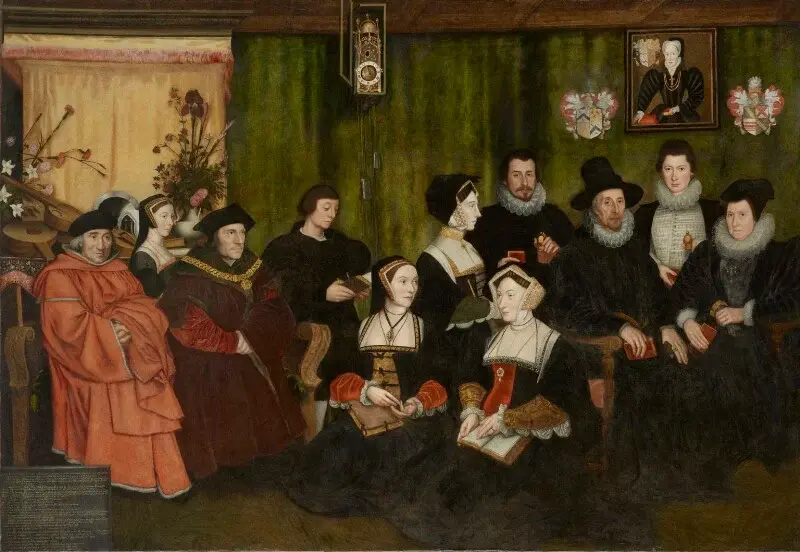
Sir Thomas More is a play which should have been lost to the boxes of the British Library. An Elizabethan dramatisation of More's life, the play's authorship is still debated, and historians are unsure as to whether it was ever even performed before the twentieth century.[1] Nonetheless, the play remains on library shelves and English Literature courses due to the inclusion of a three-page addition, attributed by our best palaeographers to William Shakespeare.
The excerpt, from Act II Scene 4 of the play, imagines More's response to the rioters of "Evil May Day", a xenophobic protest which objected to the migration of foreigners into London in 1517. As the under-sheriff of London, More was responsible for dispersing the crowd, which the author imagines through a plea to the rioters' compassion. Known as "The Strangers' Case" monologue, the language of the verse evokes responses to today's injustices:
"Imagine that you see the wretched strangers,
Their babies at their backs and their poor luggage,
Plodding to the ports and coasts for transportation,
And that you sit as kings in your desires,
Authority quite silent by your brawl,
And you in ruff of your opinions clothed;
What had you got?"
This monologue recently re-entered public consciousness thanks to the ever-venerated Sir Ian McKellen, who performed it in early 2026 on The Late Show with Stephen Colbert. His performance was superb, whilst emphasising gravitas and grandeur rather than political rhetoric, which the context of the scene suggests. This is quite understandable, considering the format, time-constraints, and general audience of late-night television. Imbuing the speech with a foreboding sense of condemnation, he scanned the audience before staring down the barrel of the camera. The power of the monologue lies in its direct audience address. Through the vessel of More's address to the rioters, he addresses the punters; as McKellen speaks to the studio audience, he speaks to you, sat in comfort in your home. "What had you got?"
Through his career, McKellen has fashioned himself as the face of this speech. He believes himself to have "originated" the role of More as part of the first professional production of the play in 1964. This is reasonable, given the lack of evidence for its being performed when it was written, and ignoring the few performances between 1922 and 1954 which were either conducted by students, or not open to the public. He has performed this speech in a variety of settings since, always in recognition of its relevance to our modern landscape. Nestled within a little-considered play, this address is remarkable due to its timelessness. More appeals to the rioters' humanity. He does not degrade them, insult them, but simply asks the rioters to imagine themselves in the migrants' shoes:
"Say now the king,
(As he is clement if th'offender mourn)
Should so much come too short of your great trespass
As but to banish you, whither would you go?
[…]
Why, you must needs be strangers: would you be pleased
To find a nation of such barbarous temper,
That, breaking out in hideous violence,
Would not afford you an abode on earth,
Whet their detested knives against your throats,
Spurn you like dogs"
Ian McKellen's website features a quote where he states that these pages are 'indisputably by Shakespeare'. As ever-venerated as he is, that's not exactly true. The attribution of the three-page addition to Shakespeare is based on all of the evidence we have of his handwriting: six signatures, found on four legal documents. Perhaps that's enough to tell, perhaps not. Our best palaeographers will have to keep arguing. In any case, the monologue remains as resonant as it appeared to its author over four centuries ago. McKellen is right to keep performing it.
"This is the strangers' case;
And this your mountainish inhumanity."
[1] The question of the authorship of Sir Thomas More could be an entire separate essay. The play is usually attributed to playwrights Anthony Munday and Henry Chettle; Munday wrote the original manuscript, but he was a professional copier, so perhaps he just copied somebody else's work. Who knows. Some people think Shakespeare wrote the entire play, but then again, some people think Shakespeare wrote no plays.
Bibliography
Anonymous (c. 1600). Sir Thomas More. British Library, Harley MS 7368.
Shakespeare, William (attrib.). 'The Strangers' Case', Sir Thomas More, Act II Scene 4.
The Late Show with Stephen Colbert (2026). Sir Ian McKellen performs 'The Strangers' Case'. CBS.
Read next, in Literature